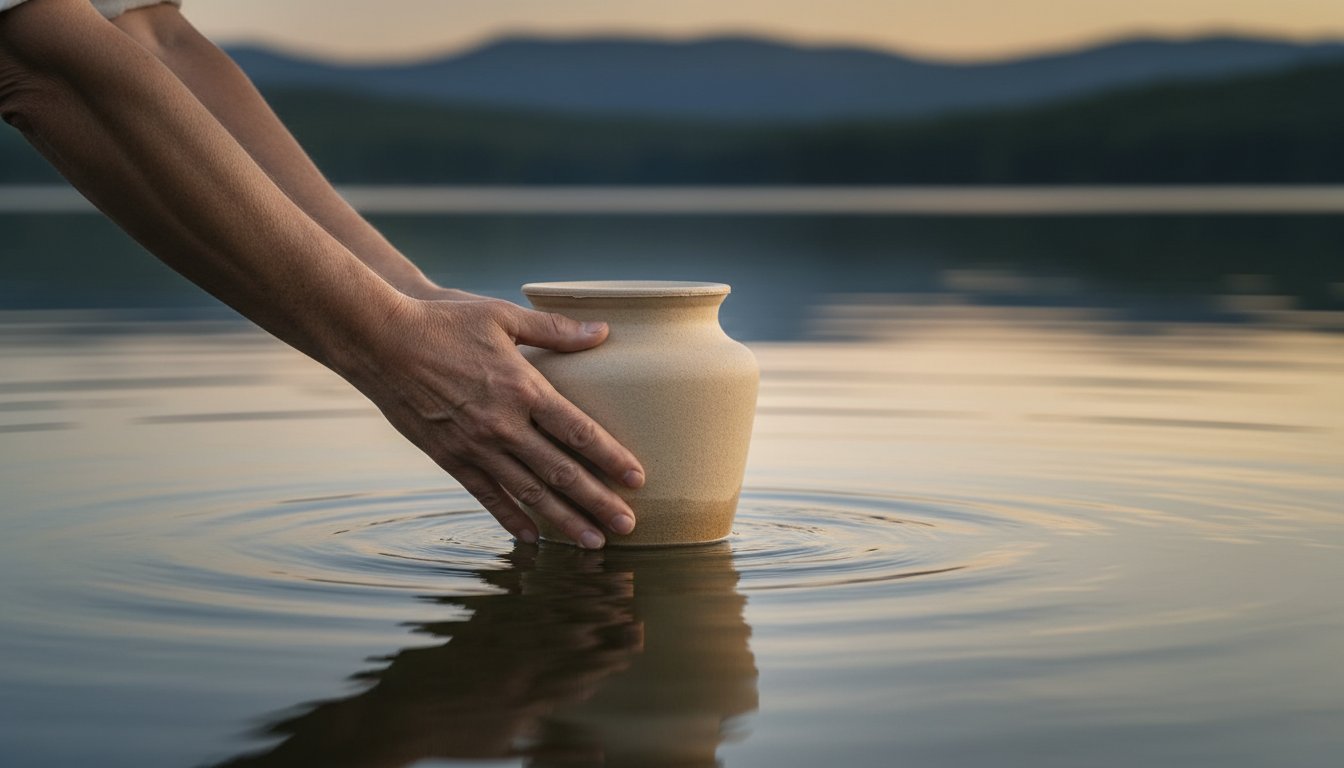
What if your final farewell didn't feel like a frantic struggle against the wind or a clumsy rush to empty a container? Many families in South Carolina envision a serene ceremony on the Atlantic or a quiet lake, but they often worry about the urn sinking like a stone or accidentally polluting the local ecosystem. It's natural to feel overwhelmed by EPA regulations or the fear of a tribute that feels more like a logistics hurdle than a peaceful send-off. These concerns shouldn't overshadow the beauty of a final goodbye.
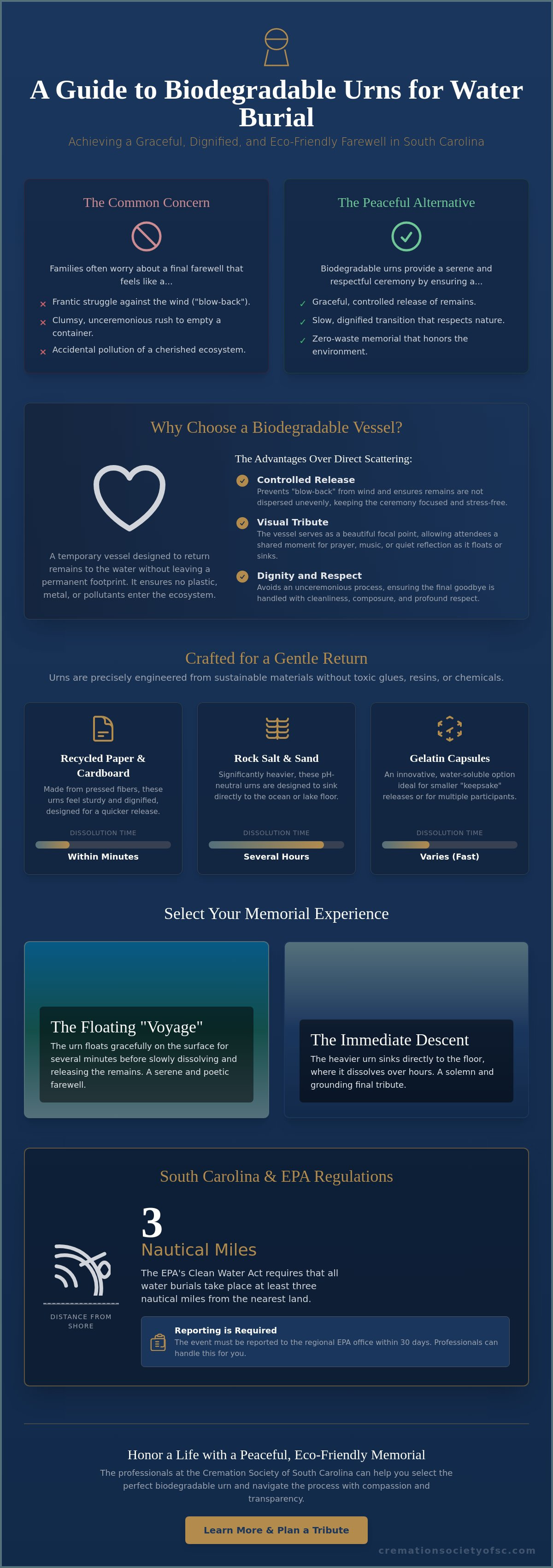
You can achieve a graceful, controlled release that honors both your loved one and the environment. Choosing biodegradable urns for water burial allows for a slow, dignified transition that respects the natural world while meeting the EPA requirement for disposal at least three nautical miles from land. In this guide, we'll explain how these specialized vessels work, the specific rules for South Carolina waters, and how to select a design that ensures a memorable final tribute.
Key Takeaways
- Learn how these specialized vessels facilitate a graceful, controlled release of remains while dissolving completely without leaving harmful residues.
- Understand the functional differences between materials like recycled paper, rock salt, and sand to ensure your ceremony proceeds exactly as planned.
- Decide between a floating "voyage" experience or an immediate descent to the ocean floor to create the most meaningful final tribute.
- Navigate South Carolina and EPA regulations for biodegradable urns for water burial, including the mandatory three-nautical-mile distance from the shore.
- Gain clarity on the reporting process and how to partner with local professionals for a transparent, eco-friendly memorial service.
What is a Biodegradable Water Burial Urn?
A biodegradable urn is a temporary vessel designed to return remains to the water without leaving a permanent footprint. These containers are engineered to dissolve completely, ensuring that no plastic, metal, or non-natural components remain in the ecosystem. This approach follows the principles of What is a Biodegradable Water Burial Urn?, which focuses on sustainable and gentle disposition methods. Unlike permanent urns, these are crafted to be part of the water's natural cycle. They provide a bridge between the physical world and the elements, allowing for a peaceful transition.
The primary purpose of using biodegradable urns for water burial is to facilitate a graceful, controlled release of cremated remains. Many families in the Upstate discover that direct scattering by hand can be unpredictable due to sudden winds. This often causes "blow-back," where remains are unintentionally dispersed toward the participants. Using a dissolving vessel prevents this stress and ensures the ceremony remains focused on remembrance. It also serves as a perfect companion to eco-friendly options like aquamation in South Carolina. Because water cremation produces remains that are already refined and eco-conscious, a water-safe urn is the final step in a truly green tribute.
The Environmental Benefits of Water-Safe Urns
These urns offer a zero-waste memorialization option for environmentally conscious families. They're made from sustainable materials such as recycled paper, rock salt, and sand. Because these components are pH-neutral, they don't disrupt the delicate marine life in our coastal waters or local lakes. Families can feel a sense of tranquility knowing they aren't introducing pollutants into the environment. The Cremation Society of South Carolina - Westville Funerals prioritizes these earth-friendly materials to support local conservation efforts and provide a clean legacy for future generations.
Urn vs. Direct Scattering: Why Use a Vessel?
While direct scattering is a traditional choice, using a vessel adds a layer of dignity and ritual to the memorial. It provides a visual focal point for the ceremony, allowing everyone present to share in the moment of release. This method ensures the final goodbye is handled with the steady composure your loved one deserves.
- Controlled release: The urn stays in one place as it begins to dissolve, preventing the remains from dispersing unevenly.
- Visual tribute: Watching the vessel float or sink provides a specific moment for prayer, music, or reflection.
- Dignity: It avoids the unceremonious dumping of remains into the current, keeping the process clean and respectful.
By choosing a dedicated vessel, you're opting for a structured and beautiful farewell. It transforms a logistical task into a meaningful act of stewardship.
Materials and Design: How These Urns Dissolve
The engineering behind modern biodegradable urns for water burial is both precise and compassionate. These vessels are designed to interact with the water in predictable, scientific ways. Most manufacturers now prioritize natural binders, using intense heat and high pressure to shape the containers. This method avoids the use of toxic glues, resins, or synthetic chemicals that could harm the marine environment. It ensures that the only thing you leave behind is a beautiful memory.
Recycled paper and cardboard are the most common materials for those seeking a quicker release. These fibers are pressed into thick walls that feel sturdy and dignified during the ceremony. Once they touch the water, they begin to soften. Within minutes, the structure loses its integrity and releases the remains into the current. For a different experience, some families choose rock salt or sand-based urns. These are significantly heavier. They're designed to sink directly to the floor of the lake or ocean. Because salt and sand take longer to break down, the dissolution process can last for several hours. This provides a slower, more meditative transition for those watching from the shore or a boat.
Gelatin-based capsules offer another innovative option. These are often used for smaller "keepsake" releases or when multiple family members wish to participate in the scattering. These capsules are completely water-soluble and clear, providing a very clean and modern aesthetic. If you're unsure which material fits your vision, the professionals at the Cremation Society of South Carolina - Westville Funerals can walk you through the options to find a perfect match.
Common Shapes: Pillows, Shells, and Orbs
The shape of the urn influences both the visual tribute and the way it moves in the water. Pillow urns are a classic choice. Their flat, rectangular design allows them to float briefly on the surface, catching the light before they gently descend. Seashell designs are also popular in South Carolina coastal ceremonies. They look natural and blend seamlessly into the ocean setting. For families who want a longer visual "voyage," eco-spheres or orbs are designed for maximum buoyancy. These shapes act like a buoy, floating for a longer period before the water eventually enters the chamber to begin the sinking process.
Weight and Buoyancy: The Dissolving Process
A well-designed water burial urn utilizes a "bottom-up" release mechanism. Small, strategically placed holes in the lower chamber allow water to enter slowly. As the water comes in, it displaces the air inside, causing the urn to sink gracefully rather than tipping over or bobbing erratically. This ensures the dignity of the remains is maintained throughout the descent. Float times aren't always exact. They depend on factors like water temperature, surface turbulence, and the total weight of the remains. In the end, the vessel becomes part of the water itself. This clean process aligns with the federal standards found in South Carolina Regulations: Where Can You Perform a Water Burial?, ensuring your tribute is as responsible as it is beautiful.
Floating vs. Sinking: Selecting Your Memorial Experience
Choosing between floating and sinking biodegradable urns for water burial is a decision that shapes the emotional rhythm of the entire service. It's not just about the vessel. It's about how you want to experience those final moments of goodbye. Some families find comfort in a slow, drifting departure that mirrors a peaceful voyage. Others prefer the certainty and directness of a swift descent into the deep. Both options provide a dignified tribute, but they offer very different visual and emotional conclusions to the ceremony.
The choice often depends on your location and the size of the group attending. If you're on a boat in the open ocean, the movement of the water will play a larger role than it would in a still, inland lake. Understanding the specific Materials and Design: How These Urns Dissolve will help you align your choice with the environment. This ensures the tribute is as seamless as it is respectful.
When to Choose a Floating Urn
Floating urns are designed for ceremonies where the family wants a visual "voyage." These vessels are ideal for ocean burials where the current can carry the urn away from the boat or pier. Most designs offer a window of 1 to 10 minutes before they begin to submerge. This time is precious. It creates a space for a favorite song, a final reading, or the tossing of loose flowers. It provides a clear, natural "ending" to the ceremony as the urn slowly disappears from the surface. This gradual transition often feels less abrupt for those in mourning.
When a Sinking Urn is Preferable
A sinking urn is often the better choice for deep-water burials or ceremonies held in high-traffic boating areas. These vessels are designed to descend immediately to the floor of the lake or ocean. This prevents the urn from drifting into unwanted areas or being disturbed by surface turbulence. They're frequently made of heavier materials like solid salt blocks or compressed sand. If you're planning a tribute in a quiet, still body of water, a sinking urn ensures the remains reach the bottom exactly where they were released. It's a choice grounded in efficiency and directness.
For ceremonies involving multiple family members, you might consider keepsake petals. These are small, individual biodegradable units that allow everyone to participate in the release. Instead of one person handling a single urn, every guest can have their own moment of tribute. This shared experience creates a sense of communal support and remembrance. Whether you choose a floating shell or a sinking salt block, the goal is a peaceful send-off that honors your loved one's legacy and your family's environmental values.
South Carolina Regulations: Where Can You Perform a Water Burial?
Navigating the legal landscape is essential for a worry-free ceremony. In South Carolina, the rules differ significantly between the Atlantic coast and our inland lakes. It's a matter of following federal mandates for the ocean while respecting state and local policies for the Upstate. The team at the Cremation Society of South Carolina - Westville Funerals provides the transparent guidance needed to ensure every legal requirement is met with steady composure. We handle the logistics so you don't have to guess about compliance during a time of grief.
For those looking toward the Atlantic, the EPA federal mandate requires that all burials occur at least three nautical miles from the shore. This isn't just a suggestion; it's a requirement to protect coastal habitats and ensure remains don't wash back toward public beaches. You're also responsible for filing a Burial at Sea notification with the EPA within 30 days of the service. Utilizing biodegradable urns for water burial is the most reliable way to meet these standards. These vessels are specifically designed to break down without leaving a permanent footprint in the ocean, fulfilling the federal requirement for non-toxic, eco-friendly materials.
Planning a Ceremony on the SC Coast
Chartering a boat from Charleston or Myrtle Beach is the most common way to reach the three-mile limit. Local captains who specialize in these services understand the exact coordinates and can help you find a dignified location away from heavy maritime traffic. Weather plays a major role here. Calm seas are necessary to ensure the vessel is released safely and remains intact until it reaches the water. These professionals help handle the maritime logistics so you can focus on the emotional weight of the moment.
Lake Burials in the Upstate
Lake burials in the Upstate require a different approach. For bodies of water like Lake Hartwell, Lake Keowee, or Lake Jocassee, you must check for specific permissions from the Army Corps of Engineers or the managing state agency. In these freshwater ecosystems, 100% biodegradability isn't just a choice; it's a necessity to protect local drinking water and wildlife. We suggest choosing low-traffic hours, such as early weekday mornings, to maintain a sense of privacy and avoid recreational boaters. This ensures the ceremony remains a quiet, personal tribute.
Inland waterways in Greenville and Spartanburg often have their own restrictions, especially near private property or municipal lines. If you're unsure about where to hold your ceremony, the Cremation Society of South Carolina - Westville Funerals offers the local expertise needed to navigate these local ordinances. We handle the technical details and reporting requirements so your family can focus on a dignified goodbye.
Honoring a Life with the Cremation Society of South Carolina
Choosing an eco-friendly tribute is a deeply personal decision that reflects a love for the natural world. It requires more than just a vessel; it requires a partner who understands the local landscape and the gravity of your loss. At the Cremation Society of South Carolina, we offer the compassionate guidance needed to select biodegradable urns for water burial that align with your environmental values. Our approach is honest, local, and dependable. We're here to ensure your final act of love is handled with the respect it deserves.
We believe that clarity is a form of compassion. This is why we maintain total transparency regarding our costs and processes. We provide clear, straightforward information on simple cremation services to ensure you can make informed decisions without added stress. By demystifying the logistics, we help you focus on what truly matters: the legacy of your loved one. Our team ensures that your choice of biodegradable urns for water burial results in a seamless and sacred experience.
Professional Support for Your Ceremony
A water-based memorial involves unique logistical challenges that go beyond the urn itself. You have to consider boat safety, tide schedules, and the specific buoyancy of your chosen vessel. We provide the professional support necessary to handle these technical details with steady composure. Our team assists with legal paperwork and mandatory EPA notifications, ensuring your ceremony is fully compliant with federal law. We also coordinate memorial services that can take place on the shore or on the water. From aquamation to mountain scattering by drone, we utilize modern methods to make your vision a reality. We don't just provide a service; we provide a guiding hand through a difficult time.
A Legacy of Service in the Upstate
As a locally owned and operated business by Westville Funerals, we have deep roots in our community. We serve families in Greenville, Seneca, and across the Upstate with a commitment to local stewardship. We provide affordable, dignified alternatives to traditional ground burial, ensuring that a meaningful send-off is accessible to everyone. Our facilities are designed to be places of emotional stewardship rather than just places of business. If you want to secure your eco-friendly wishes today, our pre-planning options provide peace of mind for the future. Contact our team for immediate assistance or to begin planning a tribute that honors both a life and the earth.
Planning Your Sustainable Tribute in South Carolina
Selecting the right vessel for a water burial is about more than aesthetics. It's about honoring a legacy while protecting our shared environment. You now understand how material choice influences the ceremony's pace and why following the three-mile federal mandate is essential for a legal, respectful tribute. Whether you prefer the visual voyage of a floating shell or the directness of a sinking salt block, these choices provide a path to a dignified final goodbye.
The Cremation Society of South Carolina remains committed to providing the steady composure you need during these moments. As locally owned and operated experts serving Greenville and Seneca for decades, we specialize in eco-friendly alternatives like Aquamation. We're here to help you handle every technical detail, from EPA notifications to selecting high-quality biodegradable urns for water burial. Our team understands the local waterways and the importance of a seamless, transparent process.
Explore Our Eco-Friendly Urn Selection & Services to begin planning a tribute that reflects your values. You don't have to navigate these decisions alone. We're ready to guide you toward a peaceful and memorable send-off.
Frequently Asked Questions
Is a permit required for a water burial in South Carolina?
For ocean burials, you don't need a permit in advance, but you must file a "Burial at Sea" notification with the EPA within 30 days. For inland waters like rivers or private property, you should check with local municipalities or the state agency managing the waterway. Staying compliant ensures your tribute remains a peaceful, stress-free event for your family and the local community.
How long does a biodegradable urn take to dissolve completely?
Dissolution times vary based on the specific material and water conditions. Recycled paper and cardboard urns typically begin to break down within minutes of submersion. Heavier options, such as those made from rock salt or pressed sand, may take several hours or even days to dissolve fully. Choosing the right biodegradable urns for water burial allows you to control the timing of the release to match your ceremony's rhythm.
Can I put flowers or other items inside the water burial urn?
You can include small items like flower petals or notes, provided they are 100% biodegradable. Avoid adding plastic, metal, or synthetic ribbons that could harm marine life or violate EPA regulations. This keeps the tribute environmentally sound while allowing for personal touches. It's a simple way to add a layer of remembrance without leaving a permanent footprint in the water.
Do I have to go 3 miles out into the ocean for a water burial?
Yes, federal law requires all ocean burials of cremated remains to take place at least three nautical miles from the shore. This mandate helps protect coastal ecosystems and prevents remains from washing back onto public beaches. Most local charter captains are familiar with these coordinates and can guide your boat to the correct distance. This ensures your final farewell is both legal and dignified.
Can we perform a water burial in a local South Carolina lake?
Lake burials are permitted but often require specific authorization from the agency managing the water, such as the Army Corps of Engineers. Lakes Hartwell, Keowee, and Jocassee have their own sets of guidelines regarding the scattering of remains. It's always best to verify these rules before your ceremony to avoid any interruptions. Using a fully water-soluble vessel is critical in these freshwater environments to protect local water quality.
What happens if the biodegradable urn doesn’t sink right away?
Many urns are intentionally designed to float for several minutes to provide a visual tribute for the family. If the urn remains on the surface longer than expected, it's usually due to air trapped inside or very calm water. Eventually, the water will enter the lower chamber, displacing the air and allowing the vessel to descend gracefully. This floating period offers a quiet moment for final readings or reflection.
Are biodegradable urns suitable for both fire cremation and water cremation ashes?
Yes, these urns are perfectly compatible with remains from both traditional fire cremation and eco-friendly water cremation. Both processes result in bone calcium that is chemically safe for the environment. Since water cremation is already a greener alternative, using a biodegradable vessel is a logical final step. It ensures the entire process remains consistent with your commitment to environmental stewardship.
Can I keep a biodegradable urn at home before the ceremony?
You can certainly keep the urn at home, provided you store it in a cool, dry place. Because these vessels are designed to react to moisture, humidity or direct contact with water will trigger the dissolving process prematurely. Keeping the urn in its original protective packaging until the day of the service is the best way to ensure it stays sturdy. This allows you to prepare for the ceremony at your own pace.

Article by
Ian Nelms
Ian Nelms has worked in the funeral and cemetery profession since 1991, beginning his career in Beaumont, Texas. Over the past three decades, he has been involved in all aspects of the death care industry—including operations, acquisitions, preneed development, crematory management, and the leadership of multi-location funeral home and cemetery organizations.
His experience across a wide range of service models provides a practical understanding of the decisions individuals and families face, along with the importance of clarity, simplicity, and value. His work today is focused on industry strategy, operational development, and improving how funeral service providers communicate and deliver options in a modern environment.
In addition to his work in funeral service, Ian is actively engaged in technology, marketing, and artificial intelligence. He applies AI systems, prompt engineering, and digital strategy to enhance how information is shared, how services are presented, and how organizations better serve their communities. He is also the founder of Memorial Flight Systems, a drone operations company focused on aerial services and emerging applications.
Earlier in his career, Ian navigated a legal matter related to a business transaction that was resolved. That experience shaped his commitment to accountability, transparency, and disciplined operations. Since then, he has continued to build, advise, and operate businesses with a focus on long-term trust and performance.
He writes to provide practical, straightforward insight for readers seeking clear information about funeral service and end-of-life options across Greenville, Spartanburg, Anderson, and the surrounding areas of Upstate South Carolina.
Disclaimer
Content provided by Ian Nelms is for informational and educational purposes only and does not constitute funeral directing, arrangement services, or licensed preneed advice. Laws and regulations vary by state; for assistance, please contact Cremation Society of SC–Westville Funerals or a licensed funeral professional in your area for more information.