

You're never too old to feel like an orphan. Whether you're thirty or sixty, the death of a mother or father often leaves a void that feels surprisingly heavy and final. It's completely natural to feel overwhelmed by the weight of logistics when you're still trying to process the emotional impact. You might feel a strange mix of guilt over things left unsaid and anxiety about a future without your primary support figure. These feelings are a normal part of the human experience, especially in a state like South Carolina where family bonds run deep.
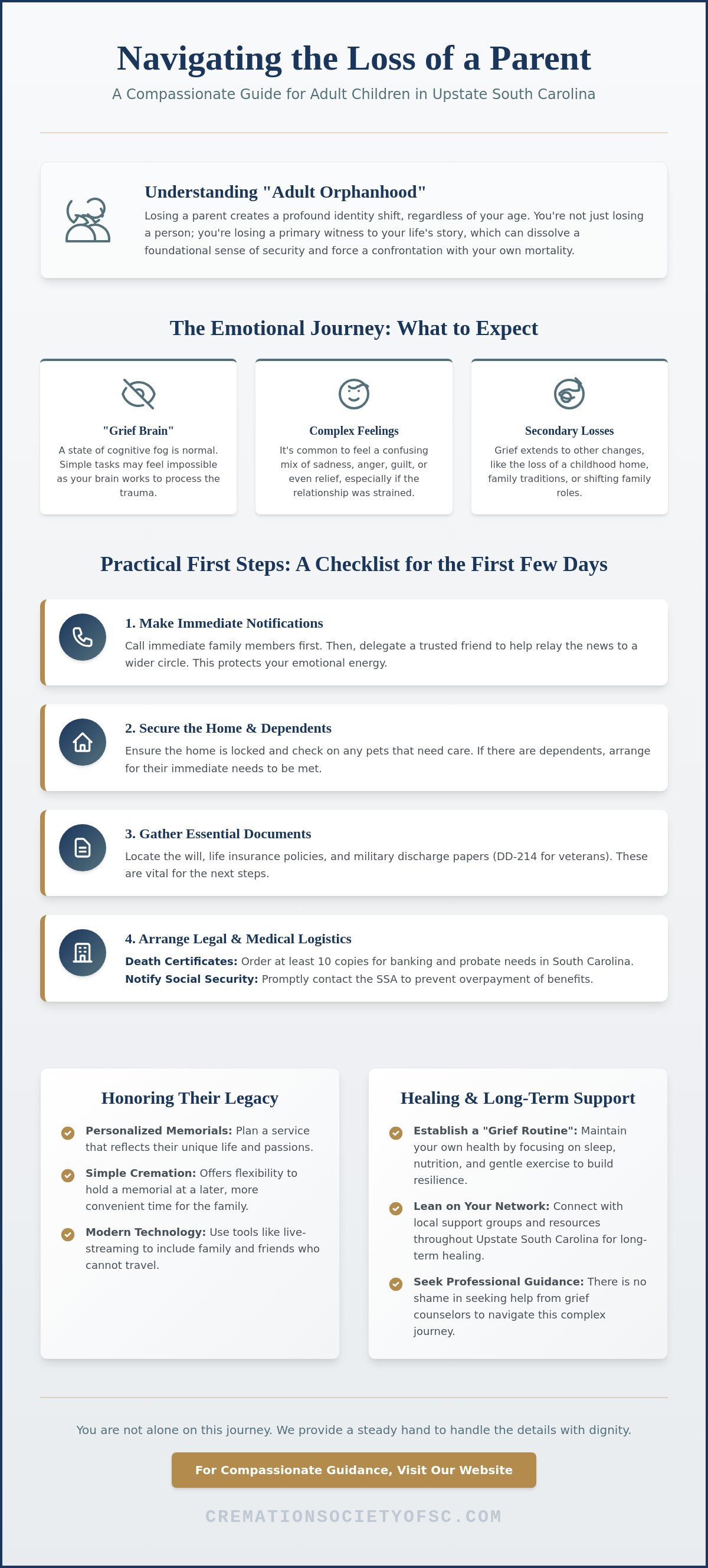
This guide provides a compassionate path for coping with loss of a parent by addressing both the practical tasks and the deeper emotional journey. You'll find validation for your unique grief and a clear checklist for the immediate tasks ahead. We also share meaningful ways to honor their legacy through local resources and personalized tributes. Our goal is to help you move through the "work of grief" while finding peace in the "work of legacy" as you handle this transition in Upstate South Carolina.
Key Takeaways
- Understand why losing a parent creates a profound identity shift known as "adult orphanhood" regardless of your age.
- Follow a clear checklist for the first few days, including who to notify first and how to secure your parent's estate.
- Learn practical strategies for coping with loss of a parent, such as establishing a "grief routine" to maintain your own health.
- Find authentic ways to honor their legacy through personalized memorial services and modern technology like live-streaming.
- Identify local support networks and resources throughout Upstate South Carolina to guide you through the long-term healing process.
Understanding the Unique Weight of Losing a Parent
Losing a parent is unlike any other bereavement. For most of us, parents are the primary witnesses to our life stories. They remember our first steps, our childhood fears, and our early triumphs. When they pass, a foundational sense of security often dissolves. You aren't just losing a person; you're losing the keeper of your history. Adult orphanhood is the profound shift in identity that occurs regardless of your age when a parent dies. This transition can feel like standing on a ledge without a safety net.
The emotional impact often acts as a floodgate. Understanding Grief involves recognizing that this specific loss frequently triggers memories of childhood or resurfaces past sorrows. You might find yourself grieving not just the person, but also secondary losses. These include the potential sale of a childhood home, the loss of a holiday anchor, or a shifting role within your own family tree. Coping with loss of a parent requires acknowledging these layers of change. It's a complex process that affects your biological, psychological, and social well-being.
The Biological and Psychological Impact of Bereavement
Many people experience "grief brain" during the initial weeks. It's a state of cognitive fog where simple tasks like grocery shopping or answering emails feel impossible. This happens because your brain is working overtime to process the trauma. This loss also forces a confrontation with your own mortality. You are now the "older generation," which can fundamentally alter your perspective on the future. While most people experience normal grief, some may face complicated grief if the pain remains debilitating for many months without easing.
Navigating Complex Relationships and Unresolved Grief
Coping with loss of a parent is even more challenging when the relationship was strained. If your bond was difficult, you might feel a confusing mix of relief, anger, and deep sadness. Finding peace is possible even if you didn't get a chance to say goodbye or seek reconciliation. You can find closure through personal reflection or symbolic acts. In cases of non-traditional bonds, you may experience disenfranchised grief, where society doesn't fully recognize the depth of your pain. Your feelings are valid regardless of the nature of the relationship. We're here to help you navigate these emotions with clarity and compassion.
Practical First Steps: What to Do in the Days Following the Loss
The first 48 hours are often the most demanding. While you are still processing the initial shock, a list of logistical demands begins to grow. Coping with loss of a parent involves managing these tasks one step at a time. Start with immediate notifications. Call the immediate family first. Then, notify a trusted friend who can help relay the news to others. This prevents you from repeating the story dozens of times. It protects your emotional energy during a vulnerable time.
Next, secure the home. Ensure all doors are locked. Check for pets that need food or water. If there are dependents, arrange for their immediate care. These simple actions protect your parent's legacy while you focus on the next steps. You'll also need to gather essential documents. Look for the will, life insurance policies, and military discharge papers. If your parent was a veteran, the DD-214 is vital for accessing earned benefits. Finding a provider who offers transparent, straightforward guidance is essential during these high-stress moments. We provide the steady hand you need to handle these details with dignity.
Immediate Legal and Medical Logistics
A legal pronouncement of death is the first requirement. If the passing occurred at home without hospice care, the South Carolina coroner will likely be involved to certify the cause. This is a standard procedure. Once the pronouncement is made, you'll need to order death certificates. For probate and banking in Upstate SC, most families find that 10 copies are sufficient. Notifying the Social Security Administration promptly ensures that benefit payments are stopped correctly, which prevents the difficult task of returning overpaid funds later. While you manage these details, utilizing Healthy Strategies for Managing Grief can help you maintain your own well-being.
Choosing a Final Disposition Method
Deciding on a final resting place requires balancing your parent's expressed wishes with the current needs of your family. Many modern families in the Upstate choose simple cremation services as a practical and respectful option. This method allows for flexibility in planning a future memorial. Local providers in Greenville and Seneca often offer assistance to guide you through the selection process. This accessibility ensures you never have to make a difficult decision alone. If you feel overwhelmed, reaching out for professional guidance can simplify the entire process.
Healthy Strategies for Managing the Emotional Journey
Managing the emotional weight of bereavement requires a structured approach. It's common to feel physically drained while processing deep sadness. Establishing a "grief routine" is the first step toward stability. Focus on the basics: drink water, eat small meals, and rest when you can. These actions provide the physical foundation needed for coping with loss of a parent. When your body is cared for, your mind is better equipped to handle the waves of emotion that follow.
The "dual process model" of grief suggests that healing isn't a straight line. You'll likely oscillate between intense sadness and moments of distraction. This is healthy. It's okay to watch a movie, work on a hobby, or laugh with a friend. These breaks prevent emotional exhaustion. You're essentially alternating between the work of loss and the work of restoration. This balance allows you to process the pain without becoming completely consumed by it.
Writing is another powerful tool for healing. Journaling helps maintain "continuing bonds" with your parent. Try writing letters to them. Share your daily updates. Express things you never got to say. This practice keeps their influence present in your life while helping you navigate your new reality. In tight-knit communities like Spartanburg and Anderson, friends often want to help. However, their well-meaning check-ins can feel overwhelming. Set clear boundaries. It's okay to say no to visitors or ask for space. Protecting your peace is a vital part of the recovery process.
Managing Triggers and Special Occasions
Special occasions often feel like hurdles. The first birthday, holiday, or anniversary will be difficult. You may also encounter "sensory triggers" without warning. The smell of a specific perfume or the sound of a favorite song in public can cause a sudden surge of grief. Prepare for these moments. Try creating new traditions that honor their memory while acknowledging the change. Cook their favorite meal or visit a local park they loved. These acts transform the void into a meaningful tribute.
When to Seek Professional Support
Sometimes, grief becomes more complex. If you experience a persistent sense of hopelessness or an inability to function, it's time to seek help. Grief-specific therapy focuses on the mourning process, whereas general counseling addresses broader mental health concerns. Local South Carolina support groups offer a sense of shared experience. They provide a safe space to talk with others who understand the unique weight of this loss. Reaching out is a sign of strength, not weakness.
Honoring Their Legacy: Meaningful Memorialization Options
Memorialization is a vital part of the healing process. It shifts the focus from the pain of the loss to the celebration of a life well-lived. Coping with loss of a parent often involves finding a balance between private mourning and public remembrance. You can personalize a memorial service to reflect their unique hobbies, values, and personality. For a parent who loved the outdoors, consider a service at a local park. If they were passionate about music, incorporate their favorite songs into the ceremony. These personalized touches ensure the service feels like a true reflection of who they were.
Modern technology makes it easier to include everyone in this process. We offer live-streaming services for family members who cannot travel to the Upstate. This ensures that distance isn't a barrier to saying goodbye. For those seeking a gentle, water-based return to nature, aquamation in South Carolina is an innovative and eco-conscious choice. This process, also known as alkaline hydrolysis, is a quiet and respectful alternative to traditional methods. You might also consider keepsake jewelry or drone scattering services to create a lasting physical or experiential connection. Coping with loss of a parent is a journey that requires both time and intentionality.
Traditional and Green Burial Options
Traditional ground burials in local Greenville cemeteries provide an enduring sense of dignity. This option offers a permanent location for future generations to visit and reflect. For parents who were passionate about the environment, green burial options are increasingly available. These services use biodegradable materials and avoid traditional embalming fluids to minimize environmental impact. When selecting a casket or vault, we help you find an option that fits both your budget and the tribute you wish to create.
Cremation and Unique Scattering Tributes
Cremation offers significant flexibility for modern families. You don't have to rush. You can hold a memorial service weeks or even months after the loss. This provides more time for out-of-town relatives to gather. We offer innovative ideas like "Tribute Tunes" to set a specific mood or mountain scattering by drone in the Blue Ridge foothills. This drone technology allows for a precise and beautiful farewell in a location that was meaningful to your parent. Selecting an urn is also a personal choice. Many families choose designs that serve as a piece of art or a discreet memorial in the home. To explore these options further, contact our team for personalized memorial planning.
Finding Support and Next Steps in Upstate South Carolina
Coping with loss of a parent is not a path you have to walk alone. In the Upstate, community is a cornerstone of the healing process. Whether you are in Greenville, Spartanburg, or Anderson, local resources are available to provide the emotional scaffolding you need. We understand that the initial service is just the beginning of your transition. Our role is to offer ongoing support that respects your parent's legacy while helping you find your footing in a changed world. This commitment to the community ensures that every family receives the dignity they deserve during their most difficult moments.
Thinking about the future can feel overwhelming right now. However, many families find a unique sense of peace in pre-planning for a surviving parent. This proactive step removes the burden of making urgent logistical decisions during a time of high stress. It allows for calm, thoughtful conversations about final wishes and financial transparency. By handling these details early, you protect your family from future uncertainty. It's a final act of care that provides long-term tranquility for everyone involved. Coping with loss of a parent is a journey that requires patience, and having a plan in place can ease the way forward.
Local Grief Support Groups and Counseling
The Greer and Taylors areas are home to numerous community organizations and churches that host bereavement support sessions. These groups offer a safe space to share your story with others who understand your specific pain. In the Seneca and Clemson communities, the concept of "grief stewardship" is deeply rooted. This means taking active responsibility for your emotional health while supporting your neighbors in theirs. If you find yourself in an immediate crisis, many local medical facilities and hospice providers offer 24/7 immediate assistance to help you navigate the most urgent moments of your journey.
Taking the Next Step with Confidence
Starting the conversation about final arrangements doesn't have to be daunting. You deserve a partner who provides non-coercive guidance and clear, upfront information. We prioritize efficiency and ease of use to ensure that critical details are never lost in complex processes. Our goal is to demystify the industry and provide affordable options that don't compromise on respect. When you're ready to move forward, we're here to provide the steady hand you need. Contact the Cremation Society of South Carolina for gentle guidance and affordable care. Remember that grief is not a task to finish, but a journey to navigate with compassion for yourself and your family.
Moving Forward with Peace and Purpose
Healing from the loss of a mother or father is a gradual transition. It requires a balance between managing necessary logistics and honoring the emotional weight of your bond. By establishing a steady routine and utilizing local Upstate resources, you can find a sustainable path through the "work of grief." Coping with loss of a parent is a journey that changes over time, but it doesn't have to be navigated in isolation. You have the power to create a legacy that reflects their unique values while protecting your own peace of mind.
As a locally owned and operated partnership, we've been serving Upstate SC for decades. We are proud to be eco-friendly water cremation specialists, offering modern alternatives that respect both your loved one and the environment. Our goal is to provide the steady hand and transparent guidance you need during this transition. To help you organize the days ahead, Download our Compassionate Planning Checklist for clear, step-by-step support. You're stronger than you feel right now. We're here to help you move forward with dignity, clarity, and hope.
Frequently Asked Questions
How long does the most intense period of grief usually last after losing a parent?
The most intense period of grief often lasts between six months and a year, though there's no fixed timeline for healing. This first year includes many "firsts" without your parent, which can trigger acute emotional responses. While the initial shock may fade after a few months, the psychological work of coping with loss of a parent continues as you integrate the loss into your daily life.
What are the first legal steps I need to take when a parent dies at home in South Carolina?
If your parent wasn't under hospice care, you must call 911 or the local South Carolina coroner to certify the death. If they were in hospice, call the hospice nurse first. Once the pronouncement is made, you can contact a funeral provider to arrange transportation. Obtaining multiple copies of the death certificate is a vital next step for handling South Carolina probate and banking requirements.
Is it normal to feel angry at my parent after they have passed away?
Yes, feeling anger toward a deceased parent is a completely normal part of the grieving process. You might feel angry about unresolved issues, the timing of their passing, or simply being left to handle the logistics alone. These feelings don't diminish your love for them. Acknowledging this anger helps prevent it from turning into long-term resentment or complicated grief during your healing journey.
What is the difference between aquamation and traditional cremation for my parent?
Aquamation, or alkaline hydrolysis, uses a water-based process rather than flame to return your parent to nature. It's a gentle, eco-friendly alternative that has a significantly lower carbon footprint than traditional cremation. Both methods result in "ashes" that can be placed in an urn or scattered. This modern choice provides a quiet, dignified option for families in the Upstate who prioritize environmental stewardship and tranquility.
How do I explain the death of a grandparent to my young children?
Use clear, concrete language and avoid euphemisms like "went to sleep," which can confuse young children. Explain that their grandparent's body stopped working and the doctors couldn't fix it. It's helpful to encourage questions and allow them to see you express your own feelings. This honesty builds trust and helps them understand that sadness is a natural response to losing someone they love dearly.
What should I do if my parent died without a will or any pre-planned funeral arrangements?
When a parent dies without a will, their estate enters the South Carolina probate process as "intestate." Regarding funeral arrangements, the next of kin is legally responsible for making decisions. Start by choosing a provider that offers transparent, straightforward pricing to avoid financial stress. We help you navigate these immediate choices with professional pragmatism to ensure your parent is honored with dignity despite the lack of a prior plan.
Are there specific veterans benefits available for my parent’s funeral in Greenville County?
Yes, honorably discharged veterans are entitled to specific benefits, including a burial flag, a government headstone, and burial in a national cemetery. In Greenville County, families often utilize the M.J. "Dolly" Cooper Veterans Cemetery in nearby Anderson. You'll need your parent's DD-214 discharge papers to apply. We specialize in Veterans Services and can coordinate these honors to ensure your parent's service is recognized with the respect it deserves.
How can I honor my parent’s memory if I cannot afford a large traditional funeral?
Honoring a parent doesn't require an expensive, traditional service. You can choose a simple cremation followed by a private scattering ceremony in a location that was meaningful to them. Other affordable options include hosting a "celebration of life" at a family home or a local park in the Upstate. These personalized tributes often feel more authentic and focused on their legacy than a formal, costly event.

Article by
Ian Nelms
Ian Nelms has worked in the funeral and cemetery profession since 1991, beginning his career in Beaumont, Texas. Over the past three decades, he has been involved in all aspects of the death care industry—including operations, acquisitions, preneed development, crematory management, and the leadership of multi-location funeral home and cemetery organizations.
His experience across a wide range of service models provides a practical understanding of the decisions individuals and families face, along with the importance of clarity, simplicity, and value. His work today is focused on industry strategy, operational development, and improving how funeral service providers communicate and deliver options in a modern environment.
In addition to his work in funeral service, Ian is actively engaged in technology, marketing, and artificial intelligence. He applies AI systems, prompt engineering, and digital strategy to enhance how information is shared, how services are presented, and how organizations better serve their communities. He is also the founder of Memorial Flight Systems, a drone operations company focused on aerial services and emerging applications.
Earlier in his career, Ian navigated a legal matter related to a business transaction that was resolved. That experience shaped his commitment to accountability, transparency, and disciplined operations. Since then, he has continued to build, advise, and operate businesses with a focus on long-term trust and performance.
He writes to provide practical, straightforward insight for readers seeking clear information about funeral service and end-of-life options across Greenville, Spartanburg, Anderson, and the surrounding areas of Upstate South Carolina.
Disclaimer
Content provided by Ian Nelms is for informational and educational purposes only and does not constitute funeral directing, arrangement services, or licensed preneed advice. Laws and regulations vary by state; for assistance, please contact Cremation Society of SC–Westville Funerals or a licensed funeral professional in your area for more information.