
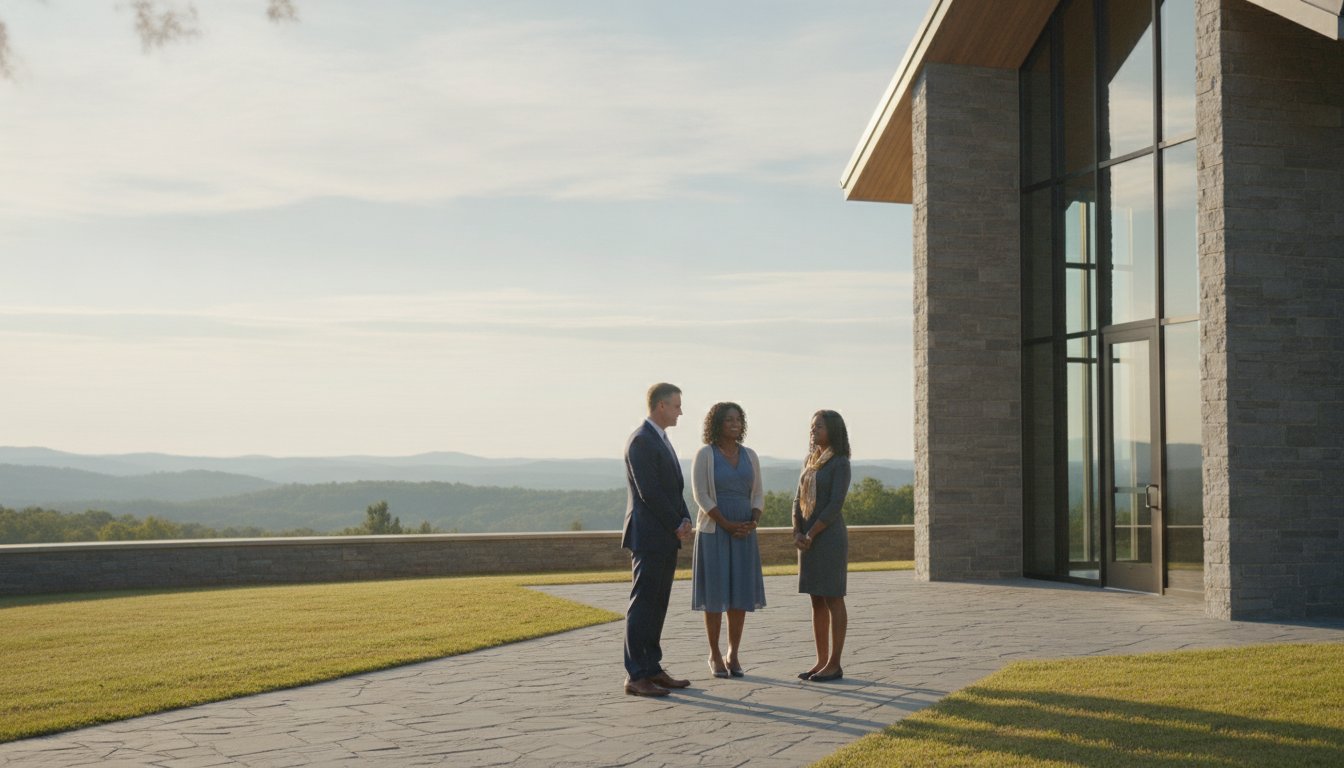
Is showing up for a grieving family you barely know an act of kindness or an unwanted intrusion? Many people in Upstate South Carolina hesitate to attend services for a neighbor or coworker because they fear they don't belong in such a private space. However, your presence is often the most visible evidence of the impact the deceased had on their community. Mastering funeral etiquette for non-family members isn't about following rigid, archaic rules; it's about showing up with dignity, respect, and quiet support.
You likely want to honor a life lived without feeling like an outsider or causing additional stress for the family. We understand that local customs in Greenville or Spartanburg can feel specific, and the pressure to say the "right thing" in a receiving line is real. This guide provides the clarity you need to navigate these moments with grace. You'll learn exactly how to dress, when it's appropriate to attend, and how to offer meaningful sympathy. We'll help you handle the logistics of attendance so you can focus on being a supportive neighbor and a steady presence for those who are hurting.
Key Takeaways
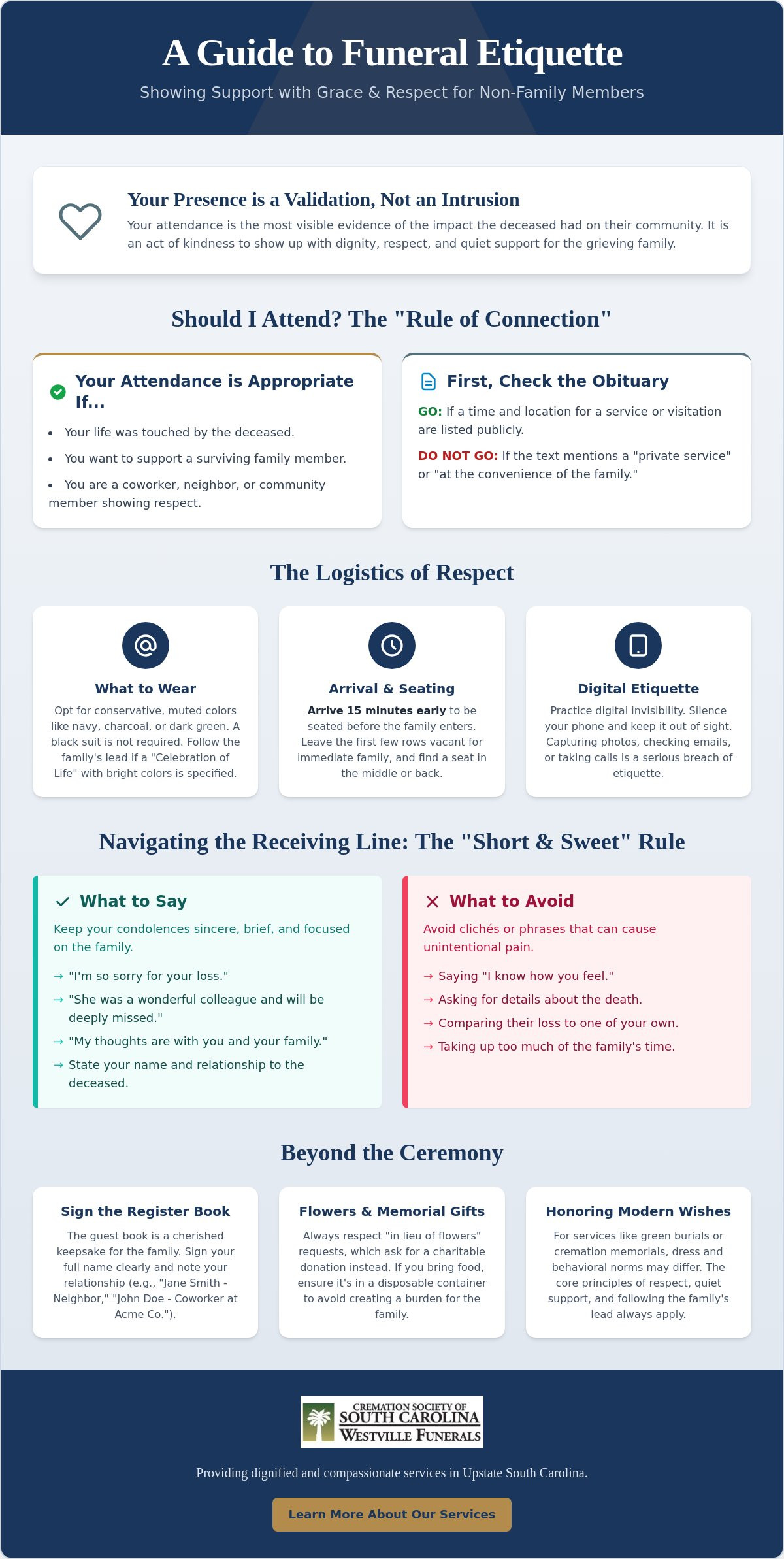
- Identify your role as a community witness and use the "Rule of Connection" to decide when your attendance provides the most meaningful support.
- Master the logistics of respect by arriving early and ensuring you sign the register book with your relationship to the deceased clearly noted.
- Navigate the receiving line with confidence by practicing the "Short and Sweet" rule to keep your interactions sincere and efficient.
- Apply proper funeral etiquette for non-family members when handling gifts, from respecting "In Lieu of Flowers" requests to participating in Upstate food traditions.
- Prepare for the specific nuances of modern services, including the dress and behavioral expectations for green burials or cremation memorials.
Am I 'Close Enough' to Attend? Deciding When to Go
Deciding whether to attend a service can cause unexpected anxiety. You don't want to intrude on a private family moment. You don't want to seem indifferent to a loss either. Understanding funeral etiquette for non-family members starts with a shift in perspective. Your presence isn't an intrusion; it's a validation. As a friend, neighbor, or colleague, you serve as a witness to the deceased’s public life. You represent the world they built outside their immediate home.
To determine if you should go, use the "Rule of Connection." If your life was touched by the deceased, or if you simply want to support a surviving family member you know well, your attendance is appropriate. In cities like Greenville and Seneca, showing up often matters more than finding the perfect words. Families rarely remember exactly what was said in a crowded room, but they do remember who stood with them in the silence of the sanctuary or chapel.
Before heading out, check the obituary for specific signals. If the text mentions a "private service" or "burial at the convenience of the family," respect those boundaries. If a time and location for a service or visitation are listed publicly, the family is inviting the community to join them. This applies to both cremation memorials and traditional ground burials. These events are part of the broader funeral customs and traditions that help a community process grief collectively. Understanding funeral etiquette for non-family members helps you interpret these signals with confidence.
Attending for a Coworker or Professional Peer
When attending for a colleague, you represent your workplace’s culture and respect. Keep the focus entirely on the loss rather than office projects or networking. If you only knew the surviving family member, your role is to be a steady anchor for your friend. True professional respect provides a quiet, supportive presence that acknowledges the loss without demanding the family's emotional energy.
Neighbors and Community Members in the Upstate
In Spartanburg and Anderson, community presence is a long-standing tradition. Neighbors often form the backbone of local support systems. If you weren't part of the inner circle, it's perfectly acceptable to attend the visitation or memorial service but skip the graveside burial. This allows you to show support while leaving the most intimate moments for the family. Balance your desire to help with a quiet, respectful demeanor that honors the family’s need for space.
The Logistics of Respect: Dress, Arrival, and Signing In
Logistics may feel like cold formalities, but they provide the structure a grieving family needs to feel supported. When you follow established funeral etiquette for non-family members, you remove yourself as a source of stress. This begins with your arrival time. If you are attending a service at a Greenville mortuary, the 15-minute rule is non-negotiable. Arriving early ensures you are seated before the family enters. It prevents awkward disruptions during the processional and shows that you value the gravity of the hour.
Seating is another area where silence speaks volumes. Always leave the first few rows vacant. These are reserved for "blood and bond"—the immediate family and closest relatives. As a friend or coworker, look for seating toward the middle or back of the chapel. During the service, practice digital invisibility. Silence your phone and keep it out of sight. Capturing photos or checking emails violates proper funeral service etiquette and distracts those trying to find peace. If you are helping a friend through the planning process, exploring local service providers can help demystify these logistical expectations for everyone involved.
What to Wear: Beyond the Black Suit
Choosing an outfit is about honoring the family's tone. Conservative attire is the safest choice. You don't necessarily need a black suit, but muted colors like navy, charcoal, or dark green show respect. Consider the Upstate SC climate if the service is outdoors in Seneca or Clemson. High humidity may require lighter, breathable fabrics that still maintain a professional appearance. Occasionally, an obituary will specify a "Celebration of Life" with bright colors. In these cases, follow the family's lead rather than sticking to traditional black.
Navigating the Register Book and Guest Log
The register book is more than a list of names; it's a tool for the family’s future healing. When you sign in, clearly state your connection to the deceased. Use descriptors like "Neighbor at Taylors" or "Greer High School friend." This context is vital for the family when they begin writing thank-you notes weeks later. They may not recognize every name, but they will value knowing how you knew their loved one. While simple cremation services often feature a more casual log-in process, the need for legibility remains the same.
Navigating the Receiving Line: What to Say (and Avoid)
The receiving line is often the most intimidating part of a service. It requires a delicate balance of speed and sincerity. For those practicing funeral etiquette for non-family members, the primary goal is to offer comfort without causing a bottleneck. The family is often exhausted, both physically and emotionally. Your role is to provide a "verbal hug" that acknowledges their loss and validates the impact the deceased had on the community.
Efficiency is a form of kindness in this setting. Follow the "Short and Sweet" rule by keeping your interaction under 30 seconds. If there is a long line at a Greenville or Easley chapel, brevity is the highest form of respect. Use your body language to bridge the gap when words feel insufficient. A firm but gentle handshake, a sincere nod, or a hand on the shoulder communicates empathy. Maintain a respectful distance and avoid crowding the bereaved, allowing them the space they need to breathe between guests.
Many people hesitate to join the line because they don't know the immediate family. You might wonder if speaking to them is an intrusion. In reality, families find great comfort in seeing the breadth of their loved one's impact. Simply introduce yourself by name and state your connection clearly. This provides the family with a frame of reference and helps them understand the full scope of the life they are honoring. Following funeral service etiquette ensures you remain a supportive presence rather than an added burden.
Meaningful Phrases for Distant Acquaintances
Focus on a single, brief positive trait or memory. You might say, "He was the best neighbor in Easley," or "She always had the kindest smile at the office." If you are there to support a coworker, a simple and grounded statement is best: "We truly valued your father's leadership and will miss his presence at the office." These specific mentions provide more comfort than generic phrases.
The 'What Not to Say' Checklist
Avoid religious platitudes like "It's God's will" unless you are certain of the family's specific faith. Never compare their loss to your own experiences. Saying "I know how you feel" can inadvertently minimize their unique pain. Finally, strike "at least" from your vocabulary. Phrases like "At least they lived a long life" or "At least they aren't suffering" often ring hollow during the acute stages of grief. Stick to simple, sincere support.
Flowers, Food, and Memorial Gifts: Beyond the Ceremony
Gifts and gestures often carry more weight after the service ends. When you follow funeral etiquette for non-family members, your first step is checking the obituary for the phrase "in lieu of flowers." This is a direct request from the family to support a cause meaningful to the deceased. Respecting this wish is more important than sending a traditional arrangement. It shows you are listening to their needs during a chaotic time. If no such request is made, a simple, handwritten sympathy card remains the most valued gift you can provide. It offers a tangible reminder of support that the family can revisit in quieter moments.
Digital participation has become a standard part of modern services in the Upstate. If you are attending via live-stream from a distance, the same rules of respect apply. Sign the digital guestbook with a thoughtful, brief message. Avoid posting screenshots of the service on social media unless the family has explicitly invited guests to share the event. This maintains the family's privacy while allowing you to witness the memorial with dignity.
Sending Flowers to a Greenville Funeral Home
If you choose to send flowers to a Greenville funeral home, timing is critical. Arrangements should arrive before the first scheduled visitation so the staff can place them appropriately. For non-family members, baskets or small plants are often more suitable than large standing casket sprays. Always include a card that clearly identifies your group. A note from "The Engineering Team at BMW" helps the family recognize the connection without confusion.
Practical Support for the Bereaved
Support in Anderson and Spartanburg often takes the form of the "Casserole Brigade." If you plan to bring food to a home, use disposable containers that don't need to be returned. Label the dish clearly with the contents and any common allergens. Avoid the vague "let me know if you need anything" offer. Instead, suggest specific tasks like mowing the lawn, walking the dog, or picking up groceries for the week.
The most critical window for support often opens two weeks after the service. This is when the initial crowd thins and the reality of the loss sets in for the survivors. A brief check-in text or a second card during this time provides immense comfort. For families who chose aquamation in South Carolina, memorial needs might differ slightly. You may see requests for tree-planting donations or eco-friendly tributes rather than traditional gifts. If you are looking for ways to honor a loved one, explore our personalized memorial options to find a fitting and respectful tribute.
Honoring Modern Wishes in Upstate South Carolina
Honoring modern wishes requires a blend of traditional respect and openness to new methods of remembrance. While many families in the Upstate still choose traditional ground burials, there is a distinct shift toward cremation memorials and celebration-of-life events. As an attendee, your flexibility is your greatest asset. In a traditional service, the casket is the focal point, but in a cremation memorial, the center of attention might be a personalized urn or a digital photo gallery. Mastering funeral etiquette for non-family members means following the family’s lead and respecting these diverse choices without judgment.
Green burials are also gaining traction in our region, with three certified natural cemeteries currently operating in South Carolina. These services often take place in wooded or meadow settings in areas like Seneca or Clemson. If you are invited to a natural burial, prioritize practical comfort over formal elegance. Sturdy, closed-toe shoes are essential for navigating unpaved paths. While you should still dress conservatively, choose breathable fabrics and footwear that allow you to stand on uneven ground without distraction.
Participating in Unique Memorial Services
Innovation has introduced tributes like mountain scattering by drone, which creates a unique atmosphere for reflection. If you attend a drone scattering, maintain a respectful distance from the equipment and follow the funeral director's instructions regarding where to stand. This ensures the flight path remains clear and the moment stays solemn. For services focusing on a photo gallery or a "Tribute Tune," give these modern elements the same quiet attention you would give a traditional eulogy.
A Final Word on Compassionate Presence
Your presence at a service is a gift that validates a life lived and supports those left behind. Whether the memorial is a traditional burial in Greenville or a modern scattering in Spartanburg, your role as a supportive neighbor is vital. Cremation Society of South Carolina - Westville Funerals facilitates a welcoming environment for all residents, ensuring that local customs are honored with dignity. We are here to help you navigate these transitions with clarity and care. Contact our compassionate team for guidance on planning or attending a service.
Supporting Your Neighbors with Confidence
Attending a service as a friend or colleague is a vital act of community support. You now have the tools to decide when to go, how to dress, and what to say during those delicate moments in the receiving line. Your presence serves as a witness to a life well lived and provides comfort that words alone cannot achieve. By arriving early, signing the register book clearly, and respecting modern wishes like green burials or charitable donations, you honor both the deceased and their survivors.
Mastering funeral etiquette for non-family members ensures you remain a steady, helpful anchor for those in grief. As a locally owned and operated partnership, we have served Greenville, Seneca, and the broader Upstate for decades. We specialize in providing affordable, dignified options, including innovative services like Aquamation. Our goal is to provide transparency and support during life's most difficult transitions.
Learn more about our compassionate funeral and cremation services in Upstate SC. You don't have to navigate these moments alone. We are here to help you show up for your community with grace and composure.
Frequently Asked Questions
Is it okay to attend a funeral if I only knew the deceased's son or daughter?
Yes, it's absolutely appropriate to attend a service to support a surviving friend or coworker. Your presence acknowledges their grief and provides a visible reminder that they aren't alone during a difficult transition. Even if you never met the deceased, standing with their children is a meaningful act of friendship. This is a core component of funeral etiquette for non-family members in our local community.
What should I wear to a funeral in South Carolina if I don't own a black suit?
You don't need a black suit to show respect. Opt for conservative attire in muted colors like navy, charcoal, or deep green. For men, a dress shirt with a tie and slacks is sufficient. For women, a modest dress or blouse and trousers works well. The goal is to blend into the background rather than draw attention to your wardrobe, especially during outdoor services in the Upstate heat.
Should I bring my children to the funeral of a neighbor or coworker?
Base this decision on the child's age and the specific family's preferences. If the children knew the neighbor or coworker, attending can be a healthy way for them to process loss. However, if they are very young or likely to be restless, it's often better to arrange for a sitter. This ensures the focus remains entirely on the memorial service and the needs of the grieving family.
What do I do if I arrive late to a funeral service at a Greenville chapel?
Enter as quietly as possible through the rear doors of the chapel. Avoid walking down the center aisle or trying to find a seat near the front reserved for the family. If the service is already in progress, wait for a natural transition, such as a hymn or a prayer, before moving to a seat in the back row. This minimizes disruption for the family and other guests.
Is it appropriate to take photos or videos during a memorial service?
Taking personal photos or videos is generally considered inappropriate and intrusive. Modern services often include live-streaming or professional recording for those who cannot attend in person. Keep your phone silenced and out of sight to maintain the sanctity of the space. Focus your energy on being present and offering support rather than capturing digital content for social media or personal use.
How much should I spend on a funeral flower arrangement as a friend?
For a friend or acquaintance, a sympathy basket or plant ranging from $70 to $90 is a thoughtful choice. If you are part of a larger group, such as a neighborhood or office team, you might consider a larger standing spray starting around $150. Always check the obituary first to see if the family has requested charitable donations in lieu of flowers, and respect those specific wishes.
What is the proper way to introduce myself to the family in the receiving line?
State your name clearly and provide a brief context for your relationship to the deceased or the family. You might say, "I'm Sarah, and I worked with John at the hospital for ten years." This simple introduction helps the family place you quickly without requiring them to guess during an emotional time. Keep the interaction brief, sincere, and focused on their loss. This is an essential practice of funeral etiquette for non-family members.
Can I attend the burial service if I am not a family member?
You may attend the burial service unless the obituary specifically states it is a "private interment" or "private burial." In Upstate South Carolina, many families welcome the community to join them at the graveside for final prayers. If you do go, stand toward the perimeter of the site to allow the immediate family to be closest to the casket. This allows you to show support while respecting their need for intimate space.

Article by
Ian Nelms
Ian Nelms has worked in the funeral and cemetery profession since 1991, beginning his career in Beaumont, Texas. Over the past three decades, he has been involved in all aspects of the death care industry—including operations, acquisitions, preneed development, crematory management, and the leadership of multi-location funeral home and cemetery organizations.
His experience across a wide range of service models provides a practical understanding of the decisions individuals and families face, along with the importance of clarity, simplicity, and value. His work today is focused on industry strategy, operational development, and improving how funeral service providers communicate and deliver options in a modern environment.
In addition to his work in funeral service, Ian is actively engaged in technology, marketing, and artificial intelligence. He applies AI systems, prompt engineering, and digital strategy to enhance how information is shared, how services are presented, and how organizations better serve their communities. He is also the founder of Memorial Flight Systems, a drone operations company focused on aerial services and emerging applications.
Earlier in his career, Ian navigated a legal matter related to a business transaction that was resolved. That experience shaped his commitment to accountability, transparency, and disciplined operations. Since then, he has continued to build, advise, and operate businesses with a focus on long-term trust and performance.
He writes to provide practical, straightforward insight for readers seeking clear information about funeral service and end-of-life options across Greenville, Spartanburg, Anderson, and the surrounding areas of Upstate South Carolina.
Disclaimer
Content provided by Ian Nelms is for informational and educational purposes only and does not constitute funeral directing, arrangement services, or licensed preneed advice. Laws and regulations vary by state; for assistance, please contact Cremation Society of SC–Westville Funerals or a licensed funeral professional in your area for more information.