

A great eulogy isn't a literary masterpiece meant for a stage. It's a gift of stewardship for the family and friends left behind. You're likely feeling the heavy weight of this responsibility while navigating the fog of early grief. It's natural to worry about forgetting a key detail, losing your composure, or facing writer's block in front of neighbors here in the Upstate. If you're wondering how to write a eulogy for a loved one while your heart is heavy, know that your sincerity matters more than perfect prose.
We understand that this task feels overwhelming right now. This guide offers a compassionate, practical framework to help you honor your loved one with a meaningful and memorable tribute. You'll find a clear path for organizing your thoughts, managing your emotions at the podium, and understanding local funeral etiquette in South Carolina. By following this steady process, you can move from a blank page to a dignified speech that celebrates a life well lived.
Key Takeaways
- Learn a simple three-part framework to organize your thoughts and focus on meaningful stories that capture your loved one's true character.
- Discover how to write a eulogy for a loved one using a "memory dump" technique to overcome writer's block and gather stories from family and friends.
- Master practical strategies for delivering your speech with composure, including specific formatting tips for your notes and the importance of reading out loud.
- Explore how modern tools like live-streaming and Eulogyph Tribute Tunes can help bridge distances and set a dignified tone for the service.
- Gain the confidence to provide a shared moment of reflection and healing for your community in Greenville, Spartanburg, or the surrounding Upstate.
What is a Eulogy and Why Does It Matter?
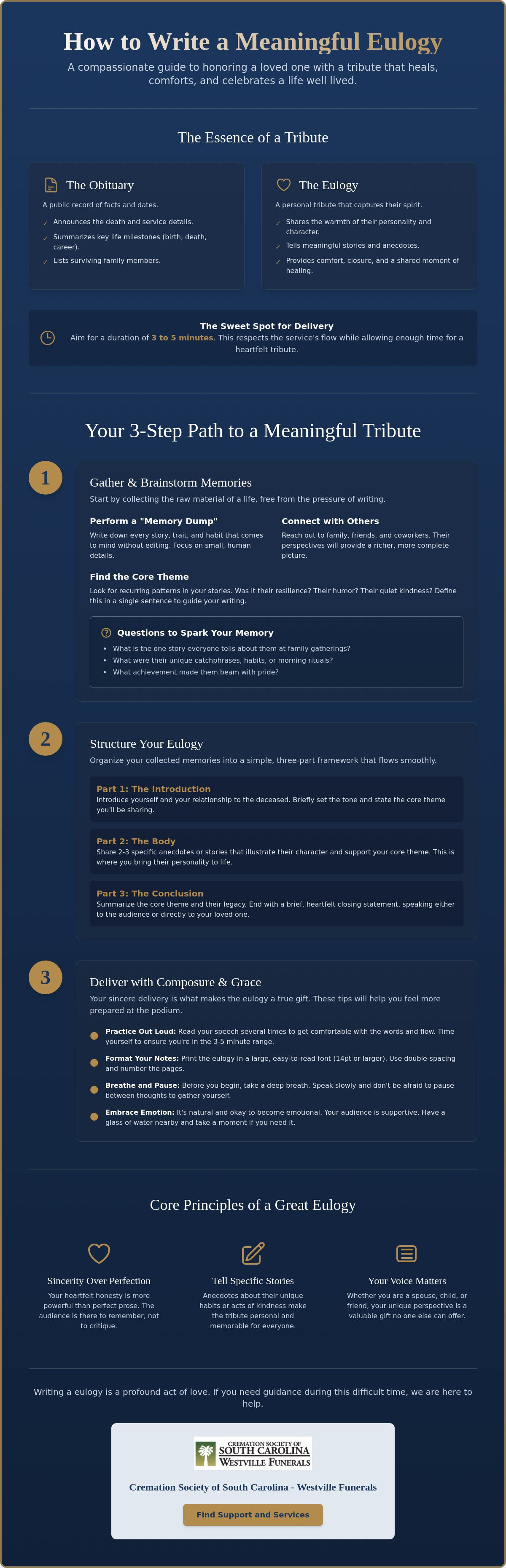
A eulogy is more than just words spoken at a lectern. It's a speech given at a funeral or memorial service to commemorate a life. While an obituary serves as a public record of facts and dates, a eulogy captures the spirit of the person you lost. It moves beyond the clinical details of a resume to share the warmth of a personality. When you're learning What is a Eulogy?, think of it as a way to honor that spirit. Learning how to write a eulogy for a loved one involves finding a bridge between a person's history and the community's memory. It provides comfort, clarity, and closure.
Most families find that the most effective tributes last between three and five minutes. This "sweet spot" respects the flow of the service while providing enough time to share a few meaningful stories. The goal isn't to summarize every decade of a life. Instead, you're looking for the essence. Focus on a few traits that defined them. Did they always have a joke ready at a Greenville barbecue? Were they the first to volunteer for a neighbor in Spartanburg? These specific details provide a shared moment of reflection and healing for everyone in the room.
The Emotional Value of a Shared Tribute
A eulogy helps the audience process their collective loss together. By sharing specific, humanizing anecdotes, you validate the life lived. You aren't just a speaker; you're a steward of memories. Hearing about a loved one's quirks or passions reminds the community why they gathered. It transforms a somber occasion into a celebration of character. This shared experience is a vital step in the grieving process for Upstate families. It turns individual sorrow into a collective acknowledgement of a meaningful life.
Setting Realistic Expectations for Yourself
Understanding how to write a eulogy for a loved one starts with discarding the need for perfection. Sincerity carries more weight than a polished performance. Your audience is the most supportive group of listeners you'll ever face. They aren't there to judge your public speaking skills. They're there to remember. Your unique perspective is exactly what the service needs. Whether you were a child, a spouse, or a lifelong friend, your viewpoint adds a layer of truth that no one else can provide. Trust your voice and the memories you hold.
Gathering Memories: The Pre-Writing Phase
The first step in learning how to write a eulogy for a loved one is to bypass the pressure of a blank page. Start with a "memory dump." This is a simple exercise where you record every story, trait, and habit that comes to mind without any editing. Don't worry about grammar or chronological order yet. The goal is to get the raw material of a life onto paper. You might recall their specific way of making coffee or how they always insisted on taking the long way home to see the mountains. These small, human details are what make a tribute resonate with an audience.
Reach out to the people who knew them in different circles. A coworker in Spartanburg may have a completely different perspective than a lifelong neighbor in Greenville. Interviewing family and friends provides a diverse range of stories that you might have missed. As you collect these anecdotes, look for recurring themes. You'll likely notice a pattern. Was it their unwavering resilience during hard times? Was it a quiet kindness that they never bragged about? Identifying these threads helps you find the "core theme" of their life. Once you have your notes, write a single sentence that defines this theme. This sentence will act as your North Star, ensuring every story you include supports the central message of your speech.
Grounding your tribute in our local community adds a layer of shared connection. Mentioning their favorite bench at Falls Park or their decades of Clemson pride makes the speech feel personal to the people in the room. If you find yourself overwhelmed by the logistics of planning while trying to write, the team at Cremation Society of South Carolina - Westville Funerals can provide the steady guidance you need to focus on what matters most.
Questions to Spark Your Memory
If you're feeling stuck, try asking yourself these specific questions to get the memories flowing:
- What is the one story everyone tells about them at Thanksgiving or family reunions?
- What were their "uniquely them" catchphrases, habits, or morning rituals?
- What was their greatest passion, and what achievement made them beam with pride?
Honoring a Veteran’s Service
Honoring a veteran requires a specific level of precision and respect. For many families in the Upstate, military service is a foundational part of a loved one's identity. Accuracy is a form of stewardship here. Ensure you correctly identify their rank and branch of service. Beyond the titles, speak to the values they carried home from their time in uniform, such as a sense of duty, leadership, or sacrifice. It's often helpful to coordinate with veterans services to ensure military honors are integrated into the ceremony with the dignity they deserve. This attention to detail honors both the person and the country they served.
The 3-Part Eulogy Framework: A Simple Structure
Organizing your thoughts is often the most difficult hurdle when you're grieving. A clear structure prevents rambling and ensures your message hits the right notes. This three-part framework is a reliable guide for how to write a eulogy for a loved one that stays focused and impactful. It moves logically from connection to character, and finally to legacy. By following this simple skeleton, you can transform your raw memories into a steady, comforting tribute.
Transitions are the glue that holds these parts together. You can move smoothly between chronological facts and emotional stories by using phrases like "That same resilience showed up later in life" or "Beyond his career, his true passion was always his family." These bridges help the audience follow the narrative without feeling lost in a sea of dates or disconnected anecdotes.
Part 1: Setting the Tone
Your introduction serves two purposes: it acknowledges the community and establishes your voice. Start by thanking the guests who traveled to Greenville, Anderson, or Spartanburg to show their support. If there are people in the room who don't know you, briefly introduce yourself and state your relationship to the deceased. This is also where you set the emotional stage. You might choose to frame the service as a joyful celebration of a long, full life or a somber reflection on a life taken too soon. Acknowledge the weight of the moment, but remain grounded.
Part 2: Telling the Story
The body of the speech is where you bring the "core theme" of their life to the forefront. Focus on two or three key stories that illustrate their character. Follow the "Show, Don't Tell" rule. Instead of simply saying they were kind, describe the specific time they stopped to help a neighbor clear brush after a summer storm. Don't be afraid to include a touch of appropriate humor. A lighthearted story about a legendary mishap in the kitchen or a stubborn habit often provides a much-needed moment of relief. Connecting these personal journeys to the local Upstate SC community makes the stories feel real and relatable to those listening.
Part 3: The Final Farewell
Your conclusion is the final act of stewardship for the person you're honoring. Summarize their legacy in one or two clear sentences. Many people find comfort in closing with a meaningful quote, a favorite scripture, or a significant song lyric. You might also choose to directly address the deceased for a poignant final sentiment. A simple "Thank you for everything, Dad" is often more powerful than a long, complex poem. Keep the closing brief and impactful. It should lead naturally into the next part of the service, providing a sense of closure while respecting the time of the other participants. Learning how to write a eulogy for a loved one means knowing how to say goodbye with dignity and grace.
Delivering the Speech with Composure and Grace
Writing the tribute is only half of the journey. The second half involves standing before your community to share those words. Knowing how to write a eulogy for a loved one gives you the map, but delivery requires a steady hand. Start by practicing out loud several times before the day of the service. Your ears will catch rhythm issues or awkward phrasing that your eyes easily miss during a silent read. If a sentence feels like a tongue-twister in your living room, simplify it now so you don't stumble later.
Your notes should be a tool, not a distraction. Avoid printing long, dense paragraphs. Instead, use a large font size, at least 14 or 16 point, and organize your thoughts into bullet points. This format is much easier to navigate if your eyes become misty or your hands begin to shake. If you lose your place, a quick glance at a bullet point is all you need to get back on track. For families planning a personalized Memorial Service, these small preparations ensure the focus remains on the life being honored rather than the mechanics of the speech.
Use the "Water Trick" to maintain your composure. Keep a glass of water at the podium. If you feel your throat tightening or your emotions rising, take a slow sip. This creates a natural pause that allows you to reset your breathing and collect your thoughts. It's also wise to designate a backup reader. Give a copy of your speech to a trusted friend or family member. Knowing someone is ready to step in if you become overwhelmed provides a psychological safety net. Often, just having that backup nearby gives you the confidence to finish the tribute yourself.
Managing Grief at the Podium
It is perfectly okay to cry. You are mourning a loss, and the audience expects and shares your emotion. They aren't looking for a professional performance; they are looking for sincerity. If you feel yourself starting to break down, find one friendly, supportive face in the front row. Focus on them to ground yourself. If you need a moment, simply pause for three seconds. To you, it may feel like a long silence, but to the listeners, it appears as a dignified moment of reflection. Take a deep breath and continue when you're ready.
Practical Delivery Tips
Nerves usually cause speakers to rush. Make a conscious effort to speak slowly so every word carries weight. This is especially important in larger Greenville chapels where sound can travel differently. Before you begin, take a moment to adjust the microphone to your height. You want to ensure everyone in the room can hear your tribute clearly. Try to make occasional eye contact with different sections of the room. This engages the community and reinforces the idea that you are all sharing in this remembrance together.
Enhancing the Tribute with Personalized Services
A well-crafted speech is the heart of a ceremony, but the atmosphere surrounding those words matters just as much. When you are learning how to write a eulogy for a loved one, consider the sensory details of the environment. We offer Eulogyph Tribute Tunes to help set a steady, emotional tone that complements your spoken tribute. This professional musical backdrop ensures there are no jarring silences while you gather your thoughts or move between stories. These personalized touches allow memorial services to feel like a true reflection of the individual's character rather than a generic event.
Modern technology also ensures that distance doesn't prevent family from participating in the healing process. We utilize live-streaming for family members who cannot travel to South Carolina, allowing them to hear your words in real time. For those who lived with a spirit of adventure, you might even incorporate unique elements like mountain scattering by drone for a final farewell. This modern approach provides a powerful visual conclusion to the stories shared in your eulogy. It transforms the service into a multi-dimensional experience that honors a life in a way that words alone sometimes cannot.
Beyond the Spoken Word
Visual aids can bridge the gap between your words and the audience's memories. Using photo slideshows during the service visually complements your stories, providing a face to the anecdotes you share. You may also choose to display personalized merchandise, such as keepsake jewelry, which can be passed down as a tactile reminder of the deceased. Your funeral director plays a vital role in coordinating these special touches. They handle the logistics of the technology and displays so you can focus entirely on your role as the steward of your loved one's legacy.
Planning for the Future
Thinking about your own legacy is a final act of compassion for your family. Pre-planning allows you to share your own "final message" and ensures your wishes are documented clearly. By making these decisions now, you reduce the emotional and logistical burden on your survivors during their time of grief. You can specify the tone you want, the music you love, and even the themes you'd like highlighted in your own tribute. If you're ready to begin this process, contact our Greenville or Seneca offices for guidance on personalized arrangements. We are here to provide a steady hand and transparent support for Upstate families.
Honoring Their Legacy with Confidence
Your role as a speaker is to act as a steward for the shared memories of your community. By using a clear three-part framework and focusing on sincere anecdotes rather than perfection, you've gained a clear path forward. Learning how to write a eulogy for a loved one is a process of turning your grief into a lasting tribute that celebrates the essence of a life well lived. Trust that your sincerity will carry more weight with your audience than a polished performance.
As a locally owned and operated partnership, the Cremation Society of South Carolina - Westville Funerals understands the needs of families in the Upstate. We offer innovative options like Eulogyph Tribute Tunes and drone scattering to help you create a truly personalized farewell. Our team provides 24/7 immediate assistance so you're supported at every step of the journey. If you need help coordinating a service that honors your loved one's unique story, contact the Cremation Society of South Carolina - Westville Funerals for compassionate guidance on memorial services. You're ready to provide a moment of healing for your family and friends.
Frequently Asked Questions
How long should a eulogy be?
A eulogy should typically last between three and five minutes. This timeframe usually translates to about 500 to 1,000 written words. Keeping your tribute concise respects the flow of the service and ensures the audience remains engaged. It's better to leave the community wanting to hear more than to risk losing their attention with a speech that runs too long. A focused message often carries more emotional weight than a long narrative.
Is it okay to tell jokes in a eulogy?
Humor is often a welcome addition to a memorial service when it reflects the true personality of the deceased. Sharing a lighthearted story or a gentle joke can provide a much-needed moment of relief for grieving families in Greenville or Spartanburg. Ensure the humor is respectful and serves to illustrate a positive character trait. If they were known for their wit, a well-placed joke is a fitting way to honor their spirit.
What if I am too emotional to finish the speech?
It's perfectly acceptable to pause, breathe, or hand the speech to a backup reader if you become overwhelmed. The audience understands your grief and shares in it. They aren't looking for a polished performance; they are looking for sincerity. Taking a moment to reset with a sip of water is a dignified way to handle the weight of the moment. Having a trusted friend ready to step in provides a necessary safety net.
Do I have to write the eulogy myself, or can someone help?
You don't have to write the tribute alone. Many people find it helpful to interview family and friends to gather diverse stories and perspectives. Collaborative writing ensures you don't miss important details and helps overcome writer's block. If you're struggling with how to write a eulogy for a loved one, reaching out to those who knew them best can provide the clarity and inspiration you need to move forward.
Should I read from a script or speak from memory?
We recommend reading from a printed script or clear bulleted notes. Grief can affect your memory and focus, making it difficult to speak entirely from the heart without a guide. Using a script ensures you include all the important facts and stories you intended to share. Print your notes in a large font to make them easy to read if your eyes become misty. This preparation provides a sense of steady composure.
Can I include a poem or a religious reading in the eulogy?
Including a poem, scripture, or meaningful song lyric is an excellent way to enhance your tribute. These elements can provide a sense of comfort and tradition, especially for families in the Upstate who value religious customs. A short reading can serve as a powerful opening or a poignant conclusion to your speech. Choose a passage that resonates with the core theme of your loved one's life to ensure the message feels integrated.
What is the difference between a eulogy and a tribute?
A eulogy is a specific speech given at a funeral, while a tribute is a broader term that can include any act of remembrance. Tributes might include photo slideshows, personalized music, or the creation of keepsake jewelry. While the eulogy focuses on the spoken word, other tributes provide visual and tactile ways to honor a legacy. Both serve the same goal of providing a shared moment of reflection and healing for the community.
How do I mention a "difficult" person in a eulogy?
Focus on shared humanity and the lessons they left behind when honoring someone with a complicated past. You don't have to ignore the truth, but a eulogy isn't the place for airing grievances. Instead, look for broad positive traits like their work ethic, their love for the outdoors, or their resilience. When learning how to write a eulogy for a loved one with a difficult history, aim for a tone of grace, honesty, and peace.

Article by
Ian Nelms
Ian Nelms has worked in the funeral and cemetery profession since 1991, beginning his career in Beaumont, Texas. Over the past three decades, he has been involved in all aspects of the death care industry—including operations, acquisitions, preneed development, crematory management, and the leadership of multi-location funeral home and cemetery organizations.
His experience across a wide range of service models provides a practical understanding of the decisions individuals and families face, along with the importance of clarity, simplicity, and value. His work today is focused on industry strategy, operational development, and improving how funeral service providers communicate and deliver options in a modern environment.
In addition to his work in funeral service, Ian is actively engaged in technology, marketing, and artificial intelligence. He applies AI systems, prompt engineering, and digital strategy to enhance how information is shared, how services are presented, and how organizations better serve their communities. He is also the founder of Memorial Flight Systems, a drone operations company focused on aerial services and emerging applications.
Earlier in his career, Ian navigated a legal matter related to a business transaction that was resolved. That experience shaped his commitment to accountability, transparency, and disciplined operations. Since then, he has continued to build, advise, and operate businesses with a focus on long-term trust and performance.
He writes to provide practical, straightforward insight for readers seeking clear information about funeral service and end-of-life options across Greenville, Spartanburg, Anderson, and the surrounding areas of Upstate South Carolina.
Disclaimer
Content provided by Ian Nelms is for informational and educational purposes only and does not constitute funeral directing, arrangement services, or licensed preneed advice. Laws and regulations vary by state; for assistance, please contact Cremation Society of SC–Westville Funerals or a licensed funeral professional in your area for more information.