South Carolina offers more freedom for a final farewell than most families realize, yet the fear of a legal misstep often keeps people from planning the tribute their loved one truly wanted. You might feel overwhelmed by the logistics of scattering ashes regulations South Carolina while you are still processing a deep loss. It's natural to worry about local ordinances, permit requirements, or trespassing during a private moment of grief.
You deserve to focus on remembrance rather than red tape. We believe that clarity regarding laws is its own form of compassion. This guide will help you secure legal peace of mind by explaining exactly where you can go, from the peaks of the Blue Ridge to the quiet corners of your own property. You'll discover the specific permit rules for National Parks, federal requirements for water ceremonies, and the most tranquil locations across Upstate South Carolina. We've gathered the facts to ensure your final goodbye is dignified, beautiful, and entirely lawful.
Key Takeaways
- Understand why scattering ashes regulations South Carolina are among the most flexible in the country, allowing for a personalized farewell without state-level restrictions.
- Identify the most tranquil locations in the Upstate, including high-elevation mountain vistas and serene lakeside settings, for a memorable ceremony.
- Learn the essential federal requirements for water scattering, such as the three-nautical-mile rule and the necessary EPA notification process.
- Discover modern ways to honor a loved one, including professional scattering services and innovative mountain tributes using drone technology.
Understanding South Carolina Ash Scattering Laws
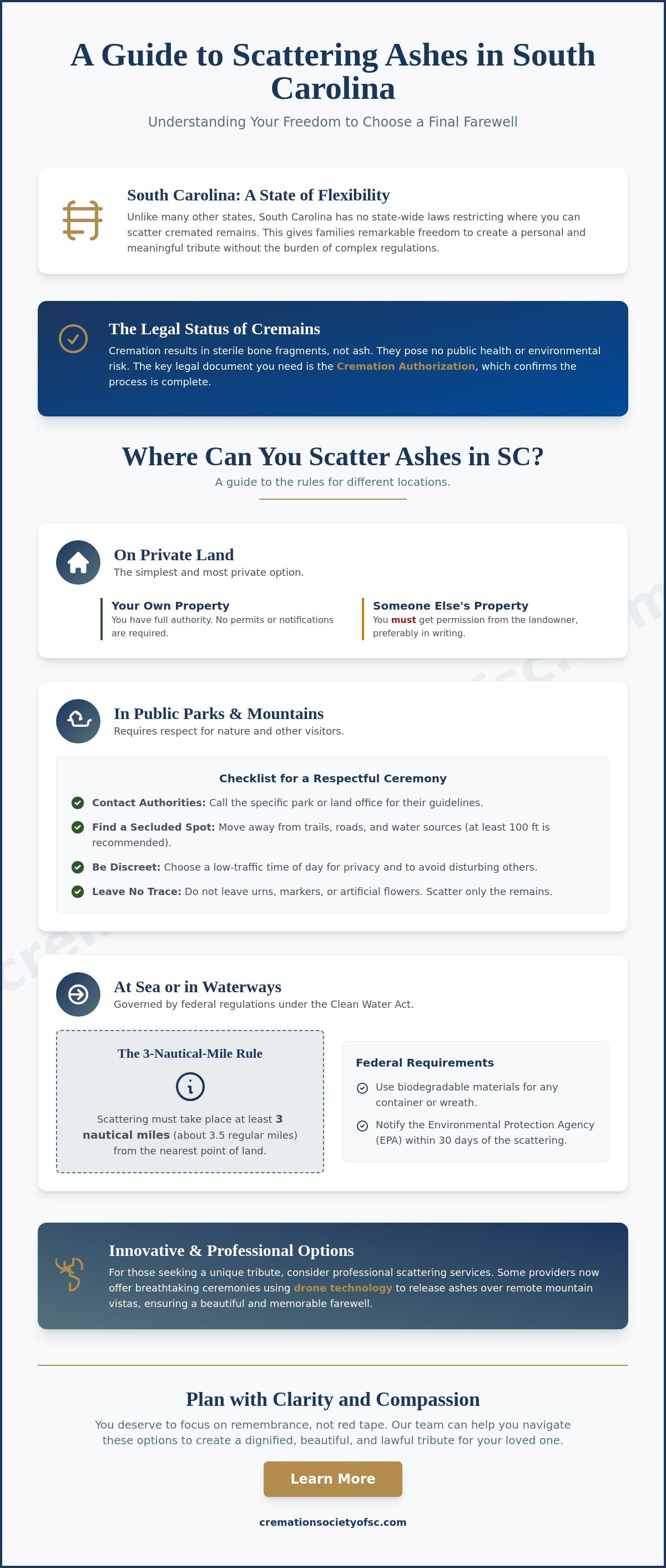
South Carolina provides families with significant freedom during a time of loss. Unlike many states that impose rigid restrictions, the scattering ashes regulations South Carolina follows are remarkably straightforward. There are no state-wide laws that dictate where you must store or scatter remains. This lack of red tape allows you to focus on what matters most: honoring a life well-lived in a way that feels personal and authentic.
The legal framework here treats cremated remains with respect but without the clinical burden of "hazardous waste" designations. You have the right to place remains in a traditional grave, a cemetery crypt, or a memorial niche. You can also choose to scatter them across the diverse landscapes of the Upstate. While state law remains lenient, you should still consider the specific city ordinances in areas like Greenville or Spartanburg. Most local offices prioritize public order and decorum rather than restricting your right to a private ceremony.
The Legal Status of Cremated Remains
Many people find comfort in understanding the science behind the process. Cremation does not produce "ash" in the way a wood fire does; instead, the process results in sterile bone fragments. Because these remains pose no threat to public health or local ecosystems, the South Carolina Department of Health and Environmental Control (DHEC) generally doesn't regulate scattering on private land. Before you proceed with any ceremony, ensure you have the Cremation Authorization document. This is the primary legal record that confirms the process is complete and the remains are ready for their final resting place.
Private vs. Public Property Permissions
The rules for where you stand often dictate the rules for what you can do. If you own the land, you have full authority. You don't need permits. You don't need notifications. You don't need government approval. However, if you've chosen a beautiful spot on someone else's property, you must obtain permission first. While a verbal agreement often suffices, a simple written note provides clarity and protects the memory of the event.
Public lands require a different level of awareness. Wildlife management areas in the Upstate are governed by conservation goals, while city parks focus on high-traffic recreation. To ensure a smooth experience, follow these three steps:
- Contact the specific park or land office directly.
- Choose a location away from trails and water sources.
- Perform the ceremony discreetly during low-traffic hours.
This simple approach ensures your ceremony remains a private, dignified moment. By respecting these boundaries, you can achieve legal peace of mind while creating a beautiful, lasting tribute for your loved one.
Where You Can Legally Scatter in the Upstate
South Carolina's Upstate is defined by its dramatic elevation changes and sprawling waterways. This natural diversity provides families with numerous options for a final tribute. While the broad scattering ashes regulations South Carolina allows for significant freedom, choosing a specific location requires a balance of logistics and respect. Whether you prefer the quiet of a mountain peak or the gentle movement of a lake, the Upstate has a place that fits your needs.
The legal basis for these choices is grounded in South Carolina Code Section 32-8-345, which permits scattering on any private property with owner consent or in designated public areas. For those seeking a permanent, maintained location, many cemeteries in the Greenville area offer established scattering gardens. These spaces provide a sense of order and a physical location for future visits. Following the scattering ashes regulations South Carolina residents rely on ensures that your tribute is both legal and respectful.
Scattering in the Blue Ridge Mountains
High-elevation vistas at Caesar’s Head or Table Rock offer a profound sense of perspective. If you plan to scatter remains in these areas, consider the physical demands of the terrain. Hiking with an urn requires a secure, lightweight container to prevent accidents on steep trails. Once you reach a scenic overlook, move at least 100 feet away from the main path. This protects local flora and ensures your ceremony remains private. Staying off the trail preserves the natural beauty of the mountains for others while providing you with the solitude you deserve.
Public Parks and Municipal Land
Greenville City and County parks are popular for their accessibility, but they are also high-traffic areas. You should always contact the park office before planning a gathering. Most municipal spaces allow for small, discreet ceremonies as long as they don't interfere with public use. Adhering to the "Leave No Trace" principle is essential. This means avoiding the use of permanent markers, artificial flowers, or large monuments.
If you find the logistics of reaching a remote peak or navigating park permits overwhelming, our cremation scattering services can provide professional assistance. We help families manage the practical details so they can focus on the emotional weight of the day.
For families who prefer the water, Lake Keowee and Lake Hartwell are iconic Upstate choices. These lakes offer vast, open spaces for a peaceful farewell. When scattering on water, ensure you are away from swimming areas, docks, and intake pipes. If you are looking toward federal land like the Sumter National Forest, remember that guidelines often require you to stay away from developed recreation sites and administrative buildings. This ensures your tribute remains a quiet moment of reflection while staying within the standards expected for public lands.
Scattering at Sea or in South Carolina Waterways
When you move your ceremony from the quiet lakes of the Upstate to the expansive Atlantic coast, the legal requirements change significantly. The scattering ashes regulations South Carolina follows for inland waters are relatively relaxed, but the open ocean is governed by federal law. The primary rule for any ocean scattering is the three-nautical-mile limit. You must travel at least three miles from the shoreline before releasing remains into the sea. This ensures that the ceremony remains private and that the coastal environment is protected from unintended debris.
Compliance is a key part of maintaining peace of mind during a difficult time. Federal law requires you to notify the Environmental Protection Agency (EPA) after the ceremony has taken place. This is not a request for permission, but rather a standard reporting procedure. You have 30 days from the date of the scattering to complete the necessary paperwork. By following these steps, you honor your loved one while respecting the marine ecosystem. Expert. Compassionate. Compliant.
EPA Compliance and Paperwork
Filing the required report is a straightforward process. You will need to use the online Burial at Sea Reporting Tool provided by the EPA. To complete this, you should have three pieces of information ready: the full name of the deceased, the date of the scattering, and the specific GPS coordinates of the location. These EPA's Burial at Sea guidelines are designed to track the use of federal waters without imposing fees or delays on grieving families. This transparency helps maintain the health of the Atlantic waters for future generations.
Water Scattering Techniques
Choosing the right method for a water ceremony can prevent stressful mishaps. We strongly recommend using water-soluble urns. These biodegradable containers are crafted from natural materials like recycled paper or rock salt. They are designed to float briefly before sinking and dissolving gracefully beneath the surface. This avoids the risk of remains blowing back toward the boat or floating as visible debris. If you prefer a shore-based tribute, the "trenching" method is a beautiful alternative. By digging a small groove in the sand below the high-tide line, you allow the incoming tide to naturally and gently carry the remains out to sea.
Safety is paramount for any boat-based service. South Carolina coastal waters can be unpredictable. Check local weather reports and ensure all guests are comfortable with the vessel's movement. A stable boat and a calm day provide the best environment for reflection. By preparing for the logistics of the ocean, you can focus entirely on the emotional significance of the moment. Dignity without the debt.
Planning a Meaningful Scattering Ceremony
Creating a final tribute involves more than just adhering to the scattering ashes regulations South Carolina provides. It requires a thoughtful approach to timing, location, and atmosphere. The Upstate offers a changing landscape that can deeply influence the tone of your ceremony. Consider the vibrant autumn foliage at Caesar's Head, the quiet snowfall in the Blue Ridge foothills, or the lush greenery of a Spartanburg spring. Aligning your service with these natural cycles provides a sense of continuity and peace.
Organization is the key to a smooth event. When logistics are handled ahead of time, you can focus entirely on your grief and remembrance. Decide who will carry the urn, who will lead the readings, and how you will invite guests. For those who want to set a specific emotional tone, using Eulogyph Tribute Tunes provides a personalized musical backdrop that honors your loved one's unique spirit. Clear roles. Prepared hearts. Lasting memories.
The Physical Act: Wind and Technique
The most important rule for any outdoor scattering is to check the wind direction. Always stand with your back to the breeze. This simple step prevents remains from blowing back toward you or your guests. Hold the container close to the ground for a controlled release rather than casting remains high into the air. If you are in a wooded area of the Upstate, consider raking a small "trench" into the forest floor. You can place the remains in this groove and gently cover them with leaves or soil. This method is discreet, respectful, and keeps the remains in your chosen spot regardless of the weather.
Personalizing the Memorial
Scattering does not have to mean letting go of everything at once. Many families find comfort in retaining a small portion of remains in keepsake jewelry. This allows you to carry a physical connection with you long after the ceremony ends. You can also combine the private act of scattering with a larger memorial service to provide closure for a wider circle of friends and family. Some families choose to create a "living memorial" by scattering near a newly planted tree or a favorite garden bed. This creates a physical space where life continues to grow in their honor.
If you feel overwhelmed by the logistics of planning these details, we are here to help. You can explore our professional cremation scattering services to ensure every detail of your tribute is handled with dignity and care.
Innovative Scattering Options in South Carolina
Traditional farewells are evolving as technology provides new ways to honor a legacy. While we have explored the foundational scattering ashes regulations South Carolina families must follow, modern tools can simplify the logistical burden. You can now choose options that prioritize environmental stewardship and high-tech precision. These advancements ensure that a final tribute is both meaningful and accessible for everyone involved. Innovation meets remembrance.
One notable innovation is Aquamation. This water-based process is a gentle, eco-friendly alternative to flame cremation. It results in sterile, fine remains that are pure white in color. Because these remains are so fine, they integrate into the Upstate soil or water much more easily than traditional remains. This makes them the ideal choice for families who want a seamless return to nature. It is a clean, modern, and compassionate approach.
The Benefits of Drone Scattering
Mountain scattering by drone is a specialized service designed for the rugged Upstate terrain. While the Blue Ridge views are iconic, many of the most beautiful peaks are difficult to reach on foot. Drone technology provides a soaring tribute that bypasses physical limitations. It offers three distinct advantages:
- Safety: Elderly family members can participate from a safe, level location without the risks of hiking.
- Visuals: High-definition video captures the release against the mountain backdrop for a permanent digital record.
- Exclusivity: Drones can reach pristine, remote areas of the forest that are otherwise unreachable.
This high-tech method ensures a dignified farewell that captures the majesty of the landscape. It provides a sense of peace that traditional scattering cannot always achieve.
Partnering with Cremation Society of South Carolina - Westville Funerals
We are here to act as your authoritative guide and reliable neighbor. Our team at Cremation Society of South Carolina - Westville Funerals handles the technical details so you don't have to. We manage location selection, provide GPS tracking, and ensure every ceremony follows the necessary scattering ashes regulations South Carolina requires. If you cannot attend the ceremony, we provide the exact coordinates of the scattering for your records. This creates a permanent digital marker for future reflection.
Our commitment is to provide simple cremation services that focus on your family's specific needs. Whether you are in Greenville or Seneca, we offer a transparent and adaptable approach. We understand established customs but use modern methods to make the process more accessible. Contact Cremation Society of South Carolina - Westville Funerals to discuss a personalized plan that honors your loved one with modern dignity. Honest. Straightforward. Reliable.
Honoring Their Legacy with Confidence
Navigating scattering ashes regulations South Carolina doesn't have to be a source of stress during your time of grief. You now understand that our state offers incredible freedom, from the peaks of the Blue Ridge to the depths of the Atlantic. Whether you choose a traditional mountain ceremony or a modern drone scattering, the most important element is the meaning behind the act. By following simple reporting rules and respecting private property, you can ensure a peaceful and dignified farewell.
Our team is here to provide the steady hand you need. We are locally owned and operated in the Upstate, offering 24/7 immediate assistance to families in transition. As pioneers in drone scattering technology, we specialize in making the unreachable possible for those who want a soaring tribute. Contact our compassionate team for scattering assistance today to begin planning a service that reflects a lifetime of love. You don't have to walk this path alone. We are ready to help you create a beautiful, lasting memory.
Frequently Asked Questions
Do I need a permit to scatter ashes in South Carolina?
You don't need a state-level permit to scatter ashes in South Carolina. State law is very flexible regarding the disposition of cremated remains. However, you must obtain permission if you are on private property that you don't own. For public lands, such as municipal parks or state-managed areas, it is always best to check with the local office to ensure you are following specific scattering ashes regulations South Carolina might have for that site.
Can I scatter ashes in Lake Keowee or Lake Hartwell?
Yes, you can scatter ashes in Lake Keowee and Lake Hartwell. These inland waterways are popular choices for water ceremonies in the Upstate. While there are no specific state permits required for lake scattering, you should stay away from swimming areas, private docks, and water intake pipes. Using a water-soluble urn ensures the remains submerge gracefully and prevents debris from floating on the surface of these beautiful local lakes.
Is it legal to scatter ashes from a plane or drone in SC?
It is entirely legal to scatter ashes from a plane or drone in South Carolina. Federal aviation regulations allow for the dropping of materials as long as they don't pose a risk to people or property on the ground. Drone scattering has become a popular innovation for families who want to reach the peaks of the Blue Ridge Mountains without the physical strain of hiking. This method provides a soaring, dignified tribute with high-definition visual records.
What should I do if I want to scatter ashes on federal land like a National Park?
You must obtain a Special Use Permit before scattering ashes in a National Park. Each park, such as Congaree National Park, has its own specific application process. These permits are generally free, but they require you to follow strict guidelines. You must stay at least 100 feet away from trails and water sources. No permanent markers or monuments are allowed, as the goal is to preserve the natural state of federal land for all visitors.
Are there any places in Greenville where scattering is strictly prohibited?
There are no state laws that strictly prohibit scattering in Greenville, but local municipal codes prioritize public order. You should avoid scattering in high-traffic areas like Unity Park or Falls Park without prior authorization from the City of Greenville. Most public spaces require that ceremonies remain small, private, and discreet. If you're unsure about a specific location, contacting the city’s parks and recreation department is the most reliable way to ensure a respectful event.
How do I notify the EPA after scattering ashes at sea?
You notify the EPA by using their online Burial at Sea Reporting Tool. Federal law requires this notification within 30 days of the ceremony. You will need to provide the name of the deceased, the date of the event, and the specific GPS coordinates where the scattering occurred. This process is free and helps the government monitor the health of the marine ecosystem while ensuring your ceremony follows federal scattering ashes regulations South Carolina coastal visitors must respect.
Can I scatter ashes on my own private property in Seneca?
Yes, you have the full legal right to scatter ashes on your own private property in Seneca. South Carolina law treats cremated remains as sterile bone fragments, so they don't pose a health risk to your land. You don't need to file any paperwork or notify the local government. This provides many families with a sense of peace, knowing their loved one is resting in a place that held deep personal meaning during their lifetime.
What is the best type of urn for a scattering ceremony?
The best type of urn depends on the location of your ceremony. For land scattering, a specialized scattering urn with a secure, easy-open lid prevents spills and ensures a controlled release. If you are planning a water ceremony at the coast or on a lake, we recommend a water-soluble urn. These containers are designed to sink and dissolve naturally. This prevents the remains from blowing back toward guests and ensures a graceful, submerged release into the water.

Article by
Ian Nelms
Ian Nelms has worked in the funeral and cemetery profession since 1991, beginning his career in Beaumont, Texas. Over the past three decades, he has been involved in all aspects of the death care industry—including operations, acquisitions, preneed development, crematory management, and the leadership of multi-location funeral home and cemetery organizations.
His experience across a wide range of service models provides a practical understanding of the decisions individuals and families face, along with the importance of clarity, simplicity, and value. His work today is focused on industry strategy, operational development, and improving how funeral service providers communicate and deliver options in a modern environment.
In addition to his work in funeral service, Ian is actively engaged in technology, marketing, and artificial intelligence. He applies AI systems, prompt engineering, and digital strategy to enhance how information is shared, how services are presented, and how organizations better serve their communities. He is also the founder of Memorial Flight Systems, a drone operations company focused on aerial services and emerging applications.
Earlier in his career, Ian navigated a legal matter related to a business transaction that was resolved. That experience shaped his commitment to accountability, transparency, and disciplined operations. Since then, he has continued to build, advise, and operate businesses with a focus on long-term trust and performance.
He writes to provide practical, straightforward insight for readers seeking clear information about funeral service and end-of-life options across Greenville, Spartanburg, Anderson, and the surrounding areas of Upstate South Carolina.
Disclaimer
Content provided by Ian Nelms is for informational and educational purposes only and does not constitute funeral directing, arrangement services, or licensed preneed advice. Laws and regulations vary by state; for assistance, please contact Cremation Society of SC–Westville Funerals or a licensed funeral professional in your area for more information.