What if the most respectful way to return to the earth involved the gentle flow of water rather than the intensity of fire? It's natural to feel a sense of discomfort with traditional flame-based methods or concern about the environmental impact of a standard burial. If you're looking for a softer approach, you're likely asking what is water cremation process and how it differs from what you've known. This method, legally recognized in South Carolina since July 3, 2024, offers a tranquil, eco-friendly alternative that aligns with modern values of stewardship and care.
You deserve a clear understanding of your options during a time of loss. We'll explain the science behind alkaline hydrolysis, outline the specific steps involved, and highlight the serene benefits of this quiet transition. From its 90% reduction in energy use to its local availability in Greenville and Seneca, this guide provides the peace of mind you need to make an informed, dignified choice. Our goal is to provide clarity, support, and a steady hand as you explore this innovative path toward remembrance.
Key Takeaways
- Understand the terminology surrounding this gentle method, including technical names like alkaline hydrolysis and comforting terms like Aquamation.
- Follow a clear, step-by-step breakdown of what is water cremation process to see how a combination of water, heat, and alkali provides a peaceful transition.
- Evaluate the environmental advantages of choosing water over flame, such as a 90% reduction in energy use and the elimination of harmful air emissions.
- Learn about the sterile, nutrient-rich liquid byproduct and how the remaining minerals are respectfully processed into a fine, white ash for the family.
- Confirm the legal status of green cremation in South Carolina and discover how to access these innovative services in the Greenville and Seneca communities.
What is Water Cremation? Defining Alkaline Hydrolysis
Understanding what is water cremation process starts with seeing it as a natural transition. While the term may sound modern, it's actually a gentle, water-based method for final disposition that honors the body's natural composition. You might hear this process referred to by several names, including Aquamation, Resomation, or Green Cremation. Each of these terms describes the same fundamental method: using water instead of fire to return a loved one to the earth. It is a quiet, respectful alternative for families who feel a sense of discomfort with traditional flame-based methods.
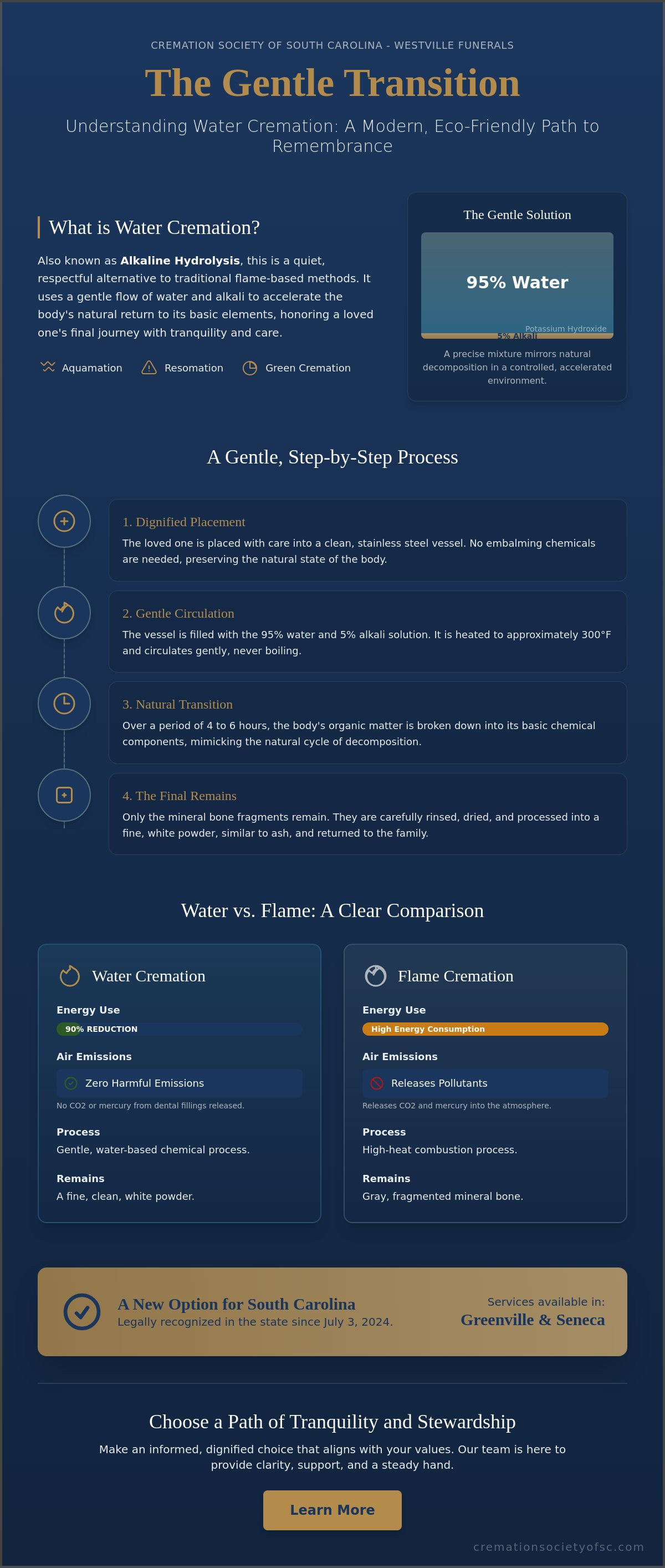
The technical name for this method is alkaline hydrolysis. To help demystify the science, it's helpful to look at the components. The process uses a solution of 95% water and 5% alkali, typically potassium hydroxide. This mixture mirrors the natural decomposition that occurs during a traditional ground burial, but it's performed in a controlled, accelerated environment. Many families find comfort in this "gentle return," as it avoids the intensity of high-heat combustion. For a deeper look at the history and legal standing of this method, you can explore What is Water Cremation? through a neutral overview.
The Science of Alkaline Hydrolysis
The physical process relies on a precise balance of water, temperature, and alkalinity. Inside a clean, stainless steel vessel, the solution gently breaks down organic matter into its basic chemical components. It's a chemical process rather than a "dissolving" action. This is an important distinction for families who worry about the dignity of the remains. Only the soft tissues are reduced to a sterile liquid, while the bone minerals remain intact. These minerals are later processed into a fine, white powder, providing families with remains that are similar to, yet often lighter than, traditional ashes.
Why Families are Choosing 'Aquamation'
Many people in the Greenville and Seneca areas are moving toward Aquamation because it feels more aligned with their personal values. There's a palpable shift away from the "harsh" perception of fire toward the "gentle" perception of water. It's a choice that reflects a life lived with care for the environment. Because what is water cremation process involves zero air emissions and significantly less energy, it appeals to those who prioritize stewardship. We see families choosing this path because it offers a sense of tranquility and innovation without sacrificing the dignity their loved ones deserve. It's a compassionate solution for a modern age.
The Step-by-Step Water Cremation Process
If you're asking what is water cremation process, it begins with the same level of care and reverence found in any traditional service. A loved one is placed into a clean, stainless steel vessel designed specifically for this purpose. Unlike flame cremation, there's no direct combustion. Instead, the vessel is filled with a precise mixture of 95% water and 5% alkali. This solution is heated to approximately 300°F while remaining under gentle pressure. This environment facilitates the natural breakdown of organic matter, a transition that mimics the earth’s own cycle but in a much shorter timeframe.
Over the course of 4 to 6 hours, the water circulates continuously to ensure a complete and thorough process. This circulation isn't aggressive. It's a steady flow that helps the water and alkali interact with the body's chemistry. For a detailed look at the technical standards and chemistry involved, The Water Cremation Process is documented by government sources to ensure safety and dignity. Once the cycle is complete, only the mineral bone fragments remain. These fragments are carefully rinsed with fresh water, dried, and then processed into a fine, white powder that families can keep in an urn or scatter in a meaningful place.
Preparation and Respectful Handling
Dignity is the foundation of our work. We handle every individual with steady composure and respect. One of the most significant benefits of what is water cremation process is that no embalming is required. This removes the need for harsh chemicals, keeping the first step of the journey truly green. Our facilities in Greenville utilize specialized, modern equipment to maintain a tranquil environment. This streamlined approach ensures that the logistics are handled efficiently so families can focus on their own reflection and remembrance.
What Remains: The 'Ashes' of Water Cremation
Families are often surprised by the quality and quantity of the remains. Because the process is so gentle, the family typically receives 20 to 30% more "ashes" than they would with flame cremation. These bone minerals are whiter and finer in texture. They're also remarkably clean since they haven't been subjected to carbon or smoke. Also, any medical implants like pacemakers or titanium joints are fully sterilized during the cycle. These items are recovered and can be recycled, further reducing the environmental footprint. If you're looking for personalized funeral services that prioritize both innovation and tradition, this method offers a clear, compassionate path forward.
Water vs. Flame Cremation: Which is Right for You?
Choosing between water and flame often comes down to personal values and environmental priorities. While flame cremation has been the standard for decades, understanding what is water cremation process allows you to see a more sustainable path. Flame cremation relies on high temperatures and combustion. Water cremation uses a gentle flow of liquid. Both reach the same respectful end, but the journey there looks very different. It's about finding the method that brings your family the most peace.
The technical differences are stark. Flame cremation requires significant amounts of natural gas or propane, reaching temperatures between 1,400°F and 1,800°F. In contrast, water cremation uses approximately 90% less energy. This efficiency significantly reduces the Environmental Impact associated with final arrangements. While flame-based methods release carbon dioxide and trace amounts of mercury into the atmosphere, the water process produces zero air emissions. This makes it a responsible choice for the community in Greenville and beyond.
Families often ask about the practical outcomes. The timeline for both methods is comparable, usually taking a few hours to complete. This ensures that the logistics don't interfere with your timeline for a memorial service. As mentioned earlier, the bone minerals recovered from water are whiter and more plentiful. This provides a clean, pure result for those who wish to keep their loved one in keepsake jewelry or a traditional urn. The end result is familiar, but the method is modern.
The Environmental Footprint
The reliance on fossil fuels is a major concern for many families today. Flame cremation burns fuel to create heat, but what is water cremation process relies on electricity to warm the water solution. This method reduces the carbon footprint of the disposition by roughly 75%. For a deeper look at these benefits, read our article on Aquamation in South Carolina: A Guide to Eco-Friendly Water Cremation. It's a choice that respects both the individual and the planet.
The Emotional Choice for Families
Grief is a personal experience. For some, the idea of fire or "burning" can be distressing. The concept of a "water return" often provides a sense of peace that fire cannot. It feels like a return to the element that sustains life. Whether you choose water or flame, the end result is the same: a dignified memorialization. You still receive remains that can be placed in an urn or scattered. The difference lies in the tranquility of the process itself.
The Environmental Impact: Why It's Called 'Green Cremation'
When families ask what is water cremation process, they often focus on the physical transition. However, the true environmental story lies in the byproduct. Unlike traditional methods, the liquid remaining after the cycle is completely sterile. It contains no DNA and poses no risk to the environment. This solution, technically known as effluent, is a nutrient-rich mix of amino acids, peptides, sugars, and soap. It represents the building blocks of life being returned to the ecosystem in their simplest form.
This liquid is safely returned to the ecosystem through municipal wastewater systems, where it follows the same treatment path as any other water. In some specialized applications, it can even serve as a natural, organic fertilizer. The process is remarkably thorough. It effectively destroys pathogens, bacteria, and even chemotherapy drugs that may remain in the body. This level of sterilization ensures that the return to nature is as clean and safe as possible for the community.
Zero Emissions and Air Quality
The absence of a chimney or exhaust stack is a primary reason why this method is considered the "green" standard. Because there is no combustion, there is no release of greenhouse gases or particulate matter. This makes it a preferred option for urban areas like Greenville or Spartanburg, where air quality is a vital community concern. It is a quiet, closed-loop system that operates without smoke or odor. This technology allows us to provide compassionate care in the heart of our neighborhoods while maintaining total public safety and environmental integrity.
Recycling of Medical Implants
Another distinct advantage involves the preservation of medical hardware. In flame-based cremation, high temperatures often oxidize or damage metals like titanium, cobalt-chrome, and gold. With the water process, these materials remain entirely intact and unchanged. They are recovered at the end of the cycle in a fully sterilized state. These metals can then be contributed to medical recycling programs, where they are repurposed for new surgical tools or industrial use. This turns a personal medical history into a final act of stewardship. If you are interested in water cremation | alkaline hydrolysis, we can provide the clear, honest details you need to understand this innovative choice.
Choosing Water Cremation in Upstate South Carolina
Finding a provider who understands the nuances of what is water cremation process is essential for peace of mind. In South Carolina, this method became a fully recognized legal option on July 3, 2024. This change came through House Bill 4116, which updated the state’s Safe Cremation Act to include alkaline hydrolysis as a valid form of final disposition. As pioneers in this technology, the Cremation Society of South Carolina is proud to offer this gentle alternative to families across the Upstate. We operate local facilities in both Greenville and Seneca, ensuring that our neighbors have direct access to modern, dignified care. When you are researching what is water cremation process, local availability and expertise are the most important factors to consider.
Many families choose to pre-plan their arrangements to ensure their final wishes are respected. This simple step allows you to lock in current pricing and provides a clear roadmap for your loved ones. It removes the heavy burden of decision-making during a time of high stress or grief. Our process is transparent, grounded, and focused on your specific needs. By planning ahead, you can secure a path that reflects your values of environmental stewardship and tranquility. We provide the support, guidance, and clarity required to make these important decisions with confidence.
Local Care for Greenville, Spartanburg, and Anderson
Your loved one never leaves our care throughout the entire journey. We handle every step of the process personally at our specialized facilities in the Upstate. This local oversight provides a level of security and accountability that distant, third-party providers simply cannot match. Whether you are in Spartanburg, Anderson, or the surrounding communities of Clemson and Easley, our team is nearby to assist you. We invite families to visit our facilities to see our modern equipment and meet our compassionate staff. We believe that transparency builds trust. Seeing the tranquil environment where we provide stewardship can offer significant comfort to those choosing this innovative path.
Next Steps: How to Arrange a Water Cremation
If you're facing an immediate need, we provide 24/7 immediate assistance to guide you through the initial logistics. We focus on efficiency and emotional sensitivity so you can focus on reflection and remembrance. For those still weighing their options between different methods, we suggest reading our Simple Cremation Services in Greenville & Upstate SC: The 2026 Guide. It offers a side-by-side look at various services to help you decide what best fits your family's needs. To receive a transparent price list or to begin the arrangement process, please reach out to our team. We are here as your supportive ally and reliable community neighbor.
Embracing a Tranquil and Sustainable Legacy
Choosing a final farewell is a deeply personal decision that reflects a lifetime of values. By understanding what is water cremation process, you've discovered a method that prioritizes both environmental stewardship and the dignity of your loved one. This gentle return to the earth offers a 90% reduction in energy usage and zero harmful air emissions. It provides a peaceful alternative for families who prefer the quiet flow of water over the intensity of fire. Our role is to provide the steady hand and transparent guidance you need during these significant moments.
As pioneers of eco-friendly Aquamation in South Carolina, we've served the Greenville and Seneca communities for decades. We remain committed to innovation and compassionate care. Our team provides 24/7 support to families throughout the Upstate. Whether you're pre-planning for the future or need immediate assistance, we're here as your reliable local neighbor. Learn more about our gentle Water Cremation services in the Upstate. We look forward to helping you create a meaningful and dignified tribute.
Frequently Asked Questions
Is water cremation legal in South Carolina?
Water cremation is fully legal in South Carolina as of July 3, 2024. This change occurred when the state legislature passed House Bill 4116, which updated the Safe Cremation Act to include alkaline hydrolysis. Families in Greenville, Seneca, and across the Upstate can now choose this method with confidence. We handle all necessary permits and legal documentation to ensure the process remains simple and respectful for your family.
Do you get ashes back from water cremation?
Yes, families receive the mineral bone remains of their loved one back in a dignified urn. While often called "ashes," these remains are actually pure calcium phosphate and are whiter and finer than those from flame cremation. Because the method is so gentle, you typically receive 20% to 30% more remains. This provides a clean and pure result for memorialization, keepsake jewelry, or scattering.
How much does the water cremation process cost compared to flame?
The cost of choosing this method is generally comparable to traditional flame-based cremation services. While prices vary based on the specific memorial options you select, we prioritize total financial transparency in our guidance. Understanding what is water cremation process helps families see the value in this gentle, eco-friendly alternative. We provide clear, straightforward pricing to help you make an informed decision without any hidden fees or pressure.
Is the water used in the process 'flushed' away?
The sterile liquid byproduct is safely returned to the ecosystem through municipal wastewater treatment systems. This solution contains no DNA and is completely non-toxic; it consists of basic organic building blocks like amino acids and sugars. This return to the water cycle is a natural, clean transition that mirrors the earth's own decomposition processes. It is a safe and responsible way to handle the final disposition.
Can we have a funeral or memorial service with water cremation?
You can absolutely hold a funeral or memorial service alongside water cremation. Many families choose to have a traditional visitation or service before the process begins to say their final goodbyes. Others prefer a memorial service once the remains are returned in a beautiful urn. We offer personalized services and live-streaming options to ensure your family can gather and remember in whatever way feels most meaningful.
What happens to pacemakers or medical implants during the process?
Medical implants like pacemakers, artificial joints, and titanium pins remain fully intact and sterilized during the cycle. Unlike flame cremation, where these items can be damaged or oxidized by high heat, the water process leaves them unchanged. We carefully recover these materials once the cycle is complete. They can then be contributed to medical recycling programs, allowing your loved one's final journey to support ongoing medical stewardship.
Is water cremation truly better for the environment?
Water cremation is the most environmentally friendly disposition option available today. It uses approximately 90% less energy than flame cremation and produces zero direct air emissions. By avoiding the use of fossil fuels and preventing the release of carbon dioxide or mercury, it protects the air quality in our local communities. It is a gentle choice for those who lived a life dedicated to environmental care and stewardship.
How long does the entire water cremation process take?
The active what is water cremation process typically takes between 4 and 16 hours to complete. This timeframe depends on the specific equipment used and the individual's body chemistry. While the cycle itself is longer than flame cremation, the overall timeline for returning remains to the family is very similar. This ensures that your memorial planning and logistics remain on a steady and predictable schedule during a difficult time.

Article by
Ian Nelms
Ian Nelms has worked in the funeral and cemetery profession since 1991, beginning his career in Beaumont, Texas. Over the past three decades, he has been involved in all aspects of the death care industry—including operations, acquisitions, preneed development, crematory management, and the leadership of multi-location funeral home and cemetery organizations.
His experience across a wide range of service models provides a practical understanding of the decisions individuals and families face, along with the importance of clarity, simplicity, and value. His work today is focused on industry strategy, operational development, and improving how funeral service providers communicate and deliver options in a modern environment.
In addition to his work in funeral service, Ian is actively engaged in technology, marketing, and artificial intelligence. He applies AI systems, prompt engineering, and digital strategy to enhance how information is shared, how services are presented, and how organizations better serve their communities. He is also the founder of Memorial Flight Systems, a drone operations company focused on aerial services and emerging applications.
Earlier in his career, Ian navigated a legal matter related to a business transaction that was resolved. That experience shaped his commitment to accountability, transparency, and disciplined operations. Since then, he has continued to build, advise, and operate businesses with a focus on long-term trust and performance.
He writes to provide practical, straightforward insight for readers seeking clear information about funeral service and end-of-life options across Greenville, Spartanburg, Anderson, and the surrounding areas of Upstate South Carolina.
Disclaimer
Content provided by Ian Nelms is for informational and educational purposes only and does not constitute funeral directing, arrangement services, or licensed preneed advice. Laws and regulations vary by state; for assistance, please contact Cremation Society of SC–Westville Funerals or a licensed funeral professional in your area for more information.